
For a long time, New Orleans hasn’t been much more than a blip on the radar to me. Home of good music and beautiful balconies in the French Quarter, but not much more.
This all changed with Treme, the HBO series from the same author of The Wire. Treme is not the best TV show of all time, by far, but it’s as full of flaws as it’s full of heart, and I couldn’t help but fall in love with New Orleans, and its titular neighborhood in particular.
So when my team at work decided to meet up for a week in Houston, I immediately took the chance of attaching a few days in New Orleans to the trip.
In the weeks leading to my departure, I filled my Google Maps with literally dozens of restaurants to try, places to see, things to do. Three days weren’t really enough, but I made it work somehow.
The First Po’ Boy
My b&b was in a kinda sketchy backstreet between Tremé and Bayou St. John, with the biggest pothole I’ve ever seen closing it from the traffic.
I arrived there in the evening, after about 20 hours of travel, and, with the appetite messed up by the terrible in-flight meal, I headed to the Parkway Bakery and Tavern for the first po’ boy of my life.
Let’s be honest here, ok? On paper, a po’ boy is nothing to write home about. All in all it’s just a baguette sandwich, isn’t it.
But this wasn’t just a damn great sandwich, it also immediately set the tone of how exceptional New Orleanians are at deep frying stuff.
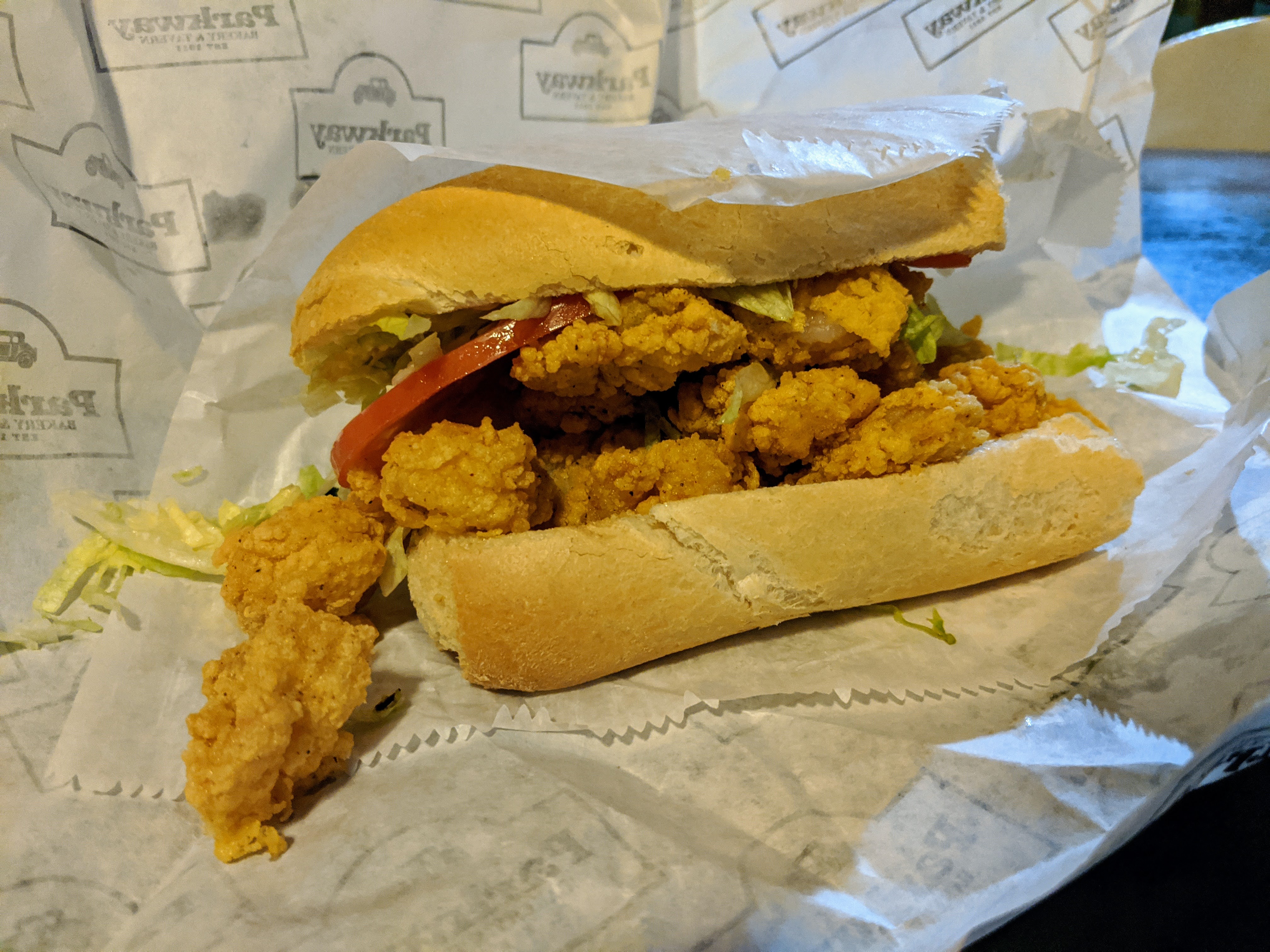
Those you see in the photo above are golden fried shrimps. They were crunchy and delicious, and also they were a lot, falling from all sides of the po’ boy. I loved it.
On my way back I walked through a completely dark street, decorated by some second (at least!) hand furniture abandoned on the sidewalk. In the darkness, I could hear a bike following me. At some point the rider calls me: “Hey young man,” it was an old black guy with few teeth left, “I’ve got a nice bike to sell for cheap!”
Unfortunately I haven’t ridden a bike in 15 years, otherwise now I’d be the proud owner of an authentic, likely stolen, New Orleanian bike.
Live Oaks, Mardi Gras Indians, and Fried Chicken
The most unexpected thing in New Orleans were the live oaks. As an experienced Cities: Skylines player, live oaks were a staple of all my painstakingly manual cities decorations, but I would have hardly expected to come to love them so much in real life.
When I strolled into a street lined with them for the first time I was amazed. But visiting the City Park, and seeing some 800 years old oaks, just left me speechless.
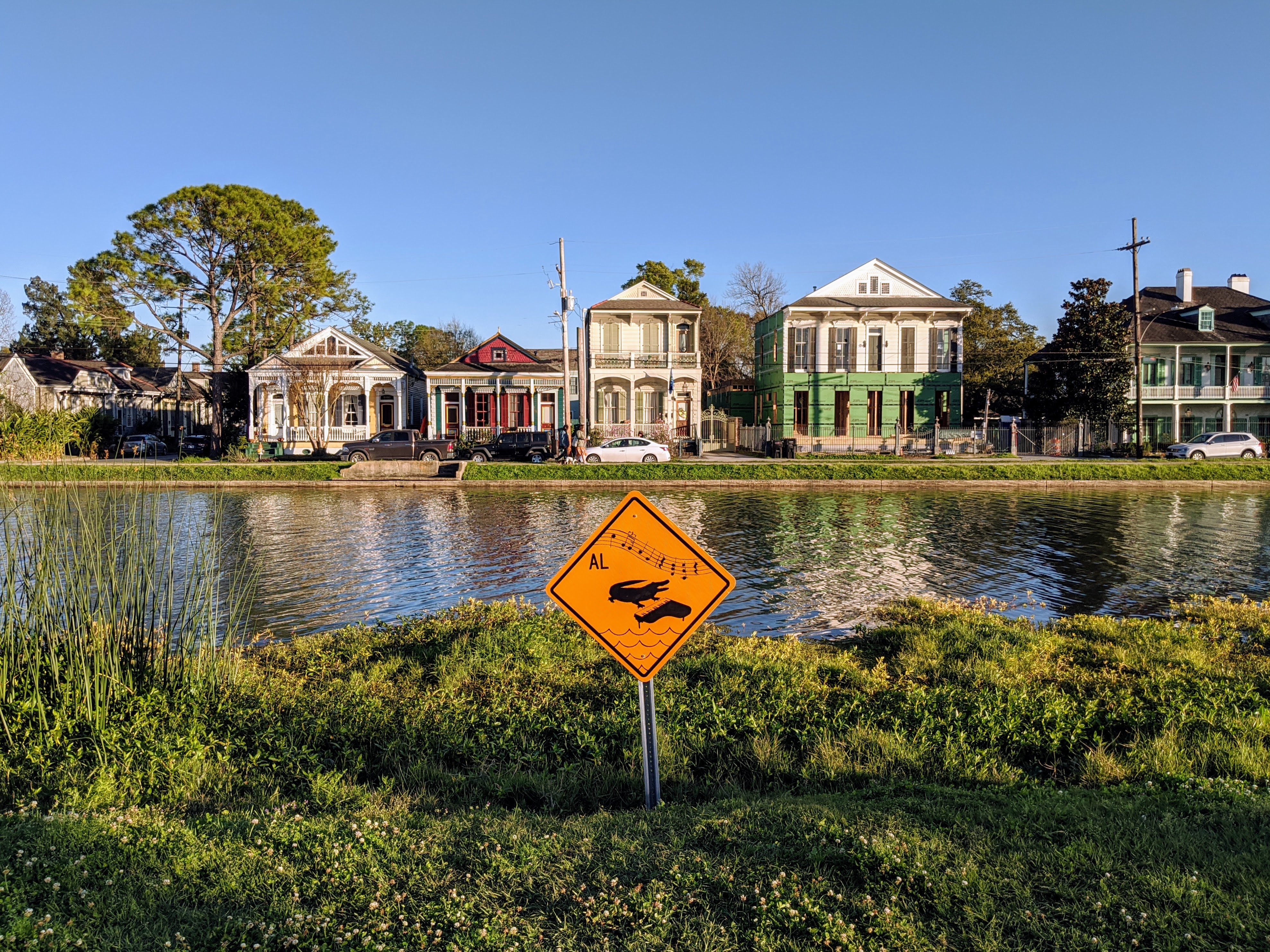
I walked there on the grassy banks of Bayou St. John, a canal that cuts the northern part of the city, all the way up to Lake Pontchartrain. There’s not much to see, but it’s a generally very pleasant place.
And if the niceness wasn’t enough, I stumbled upon the Singing Oak, right upon entering the City Park. A beautiful tree with huge wind chimes hanging from its branches, that were peacefully humming along with the soft breeze.
Close by, the magnificent Duelling Oak marks the spot where young French and Spanish gentlemen settled their disputes, and across the narrow lake the park becomes an oak grove, full of majestic trees.
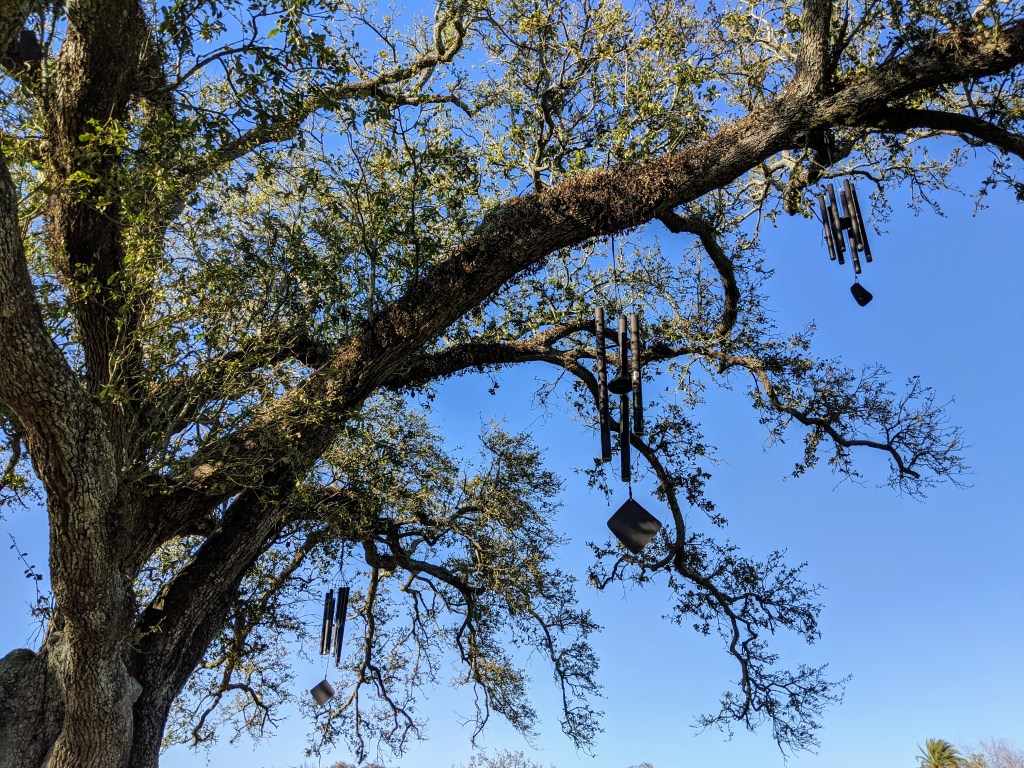
Singing Oak 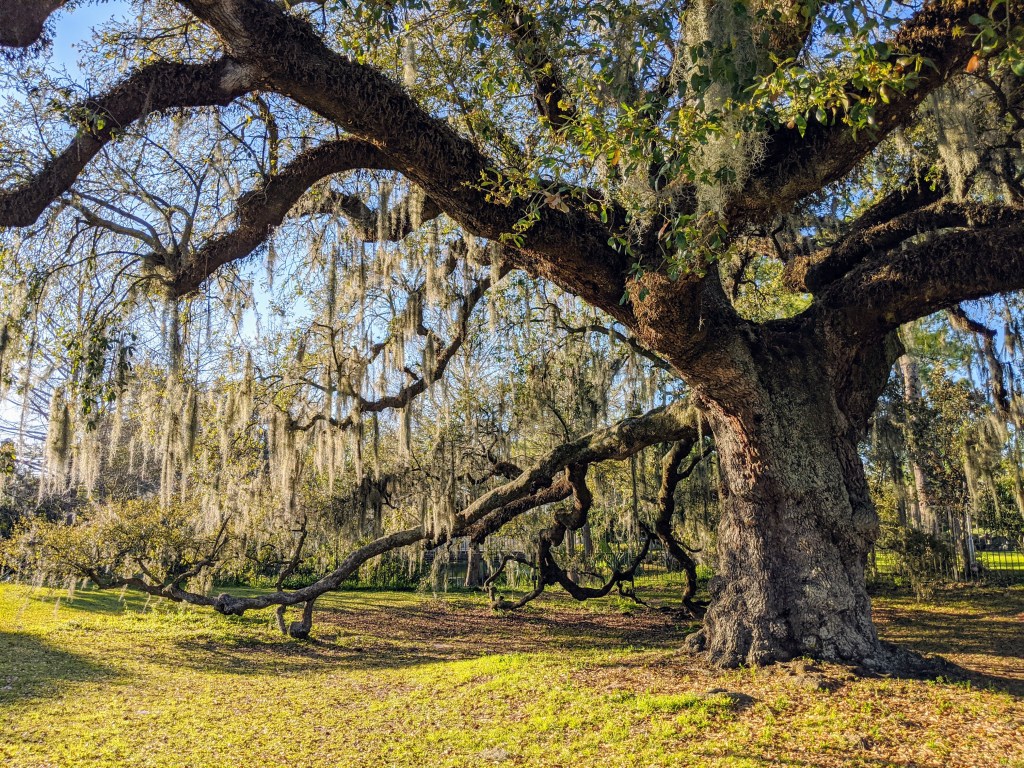
Duelling Oak 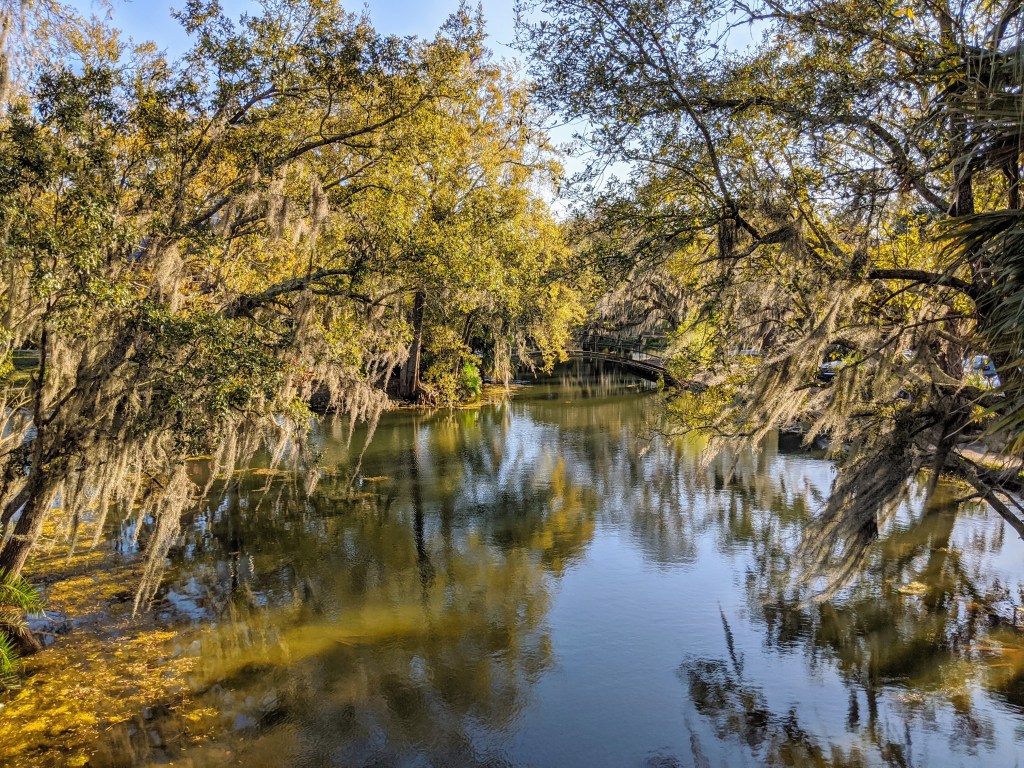
Langles Bridge 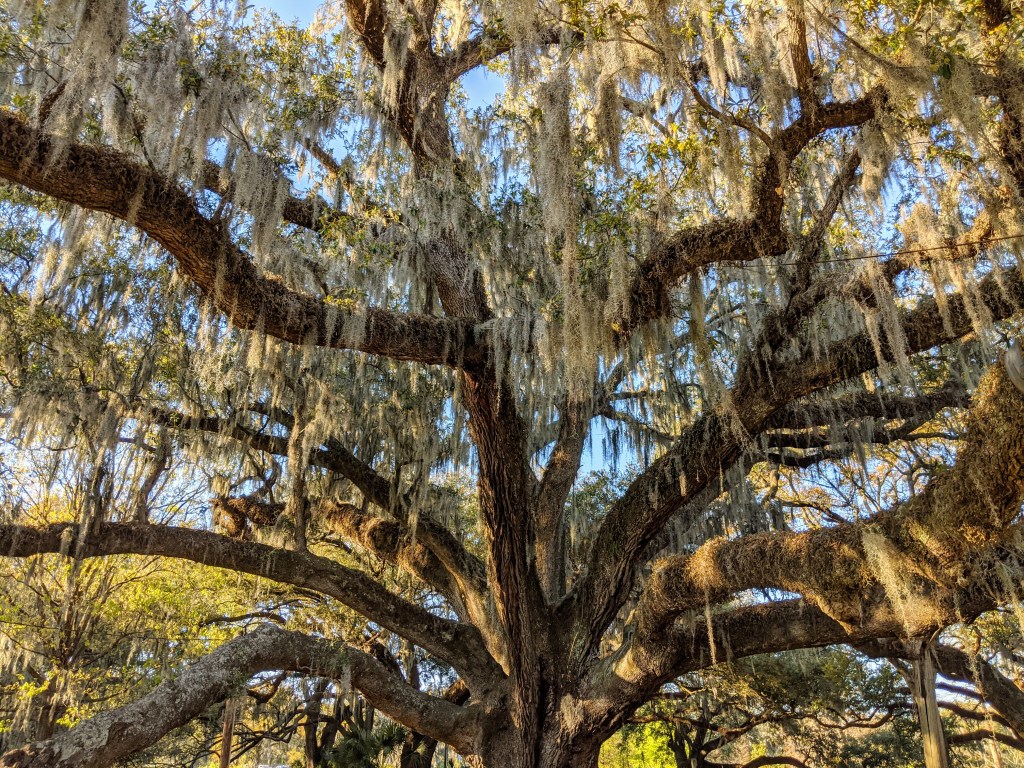
An impressive live oak covered by Spanish moss
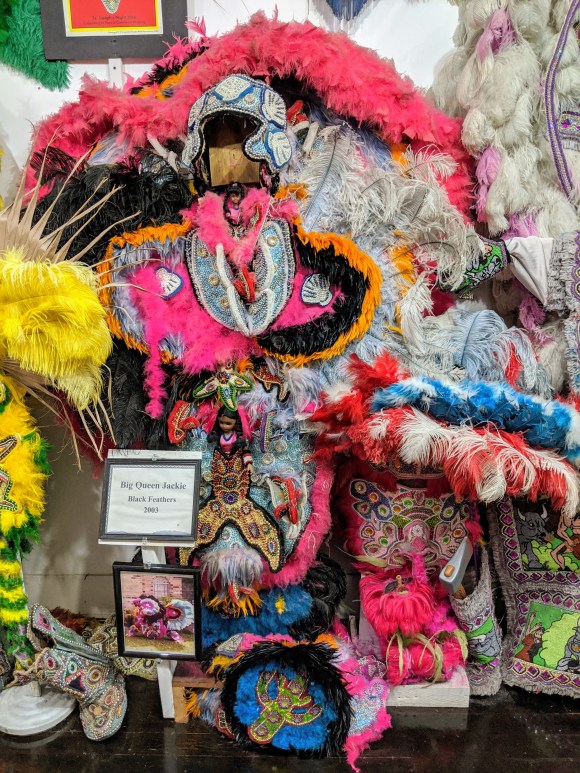
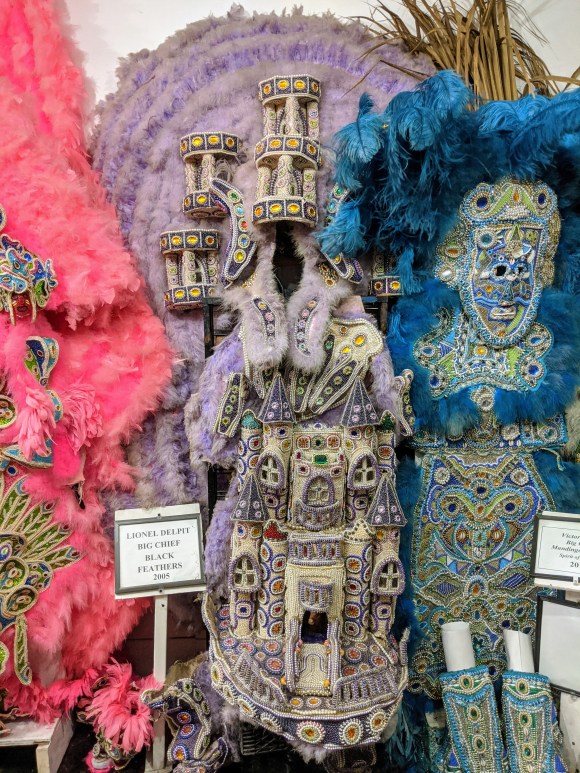
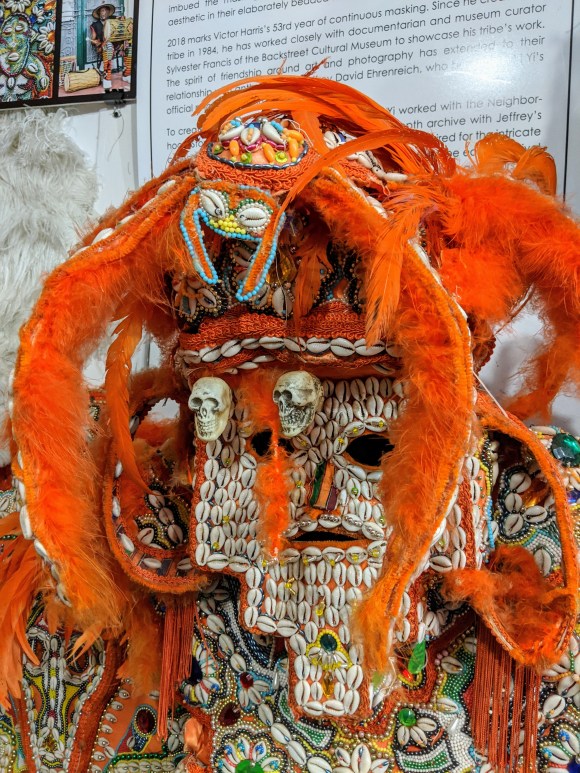
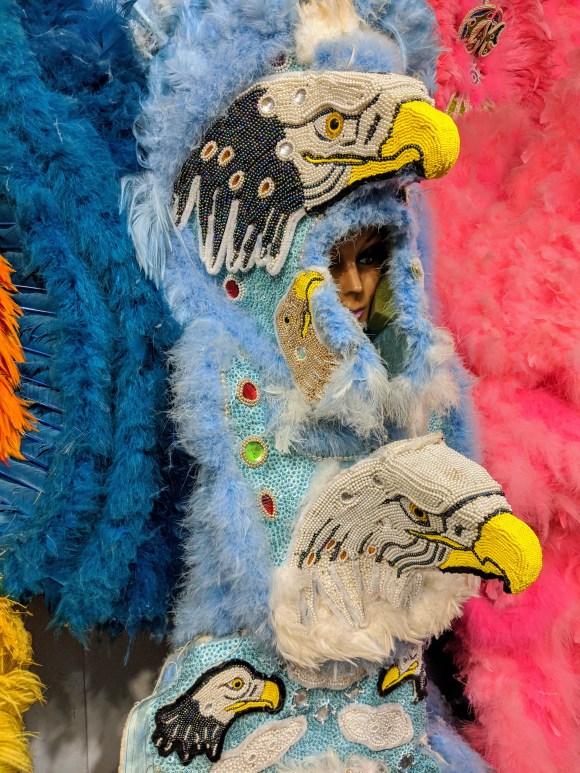
Doing my best to avoid the French Quarter before nighttime, I headed over to the Backstreet Cultural Museum, a tiny space in the heart of Tremé (the neighborhood) devoted to promoting New Orleans traditions such as Second Line parades and Mardi Gras Indians.
I won’t even pretend to be able to describe these traditions, my knowledge only based upon a couple of days in New Orleans and a couple of Treme (the TV show) binges, but this museum left me utterly fascinated.
Being able to observe a dozen of Mardi Gras Indians costumes up close was a priceless treat for me. The details, the swagger, the creativity, the incredible pride all were tangible.

Since I was already in Tremé and it was lunchtime, it was the right moment for me to try the renowned fried chicken from Willie Mae’s Scotch House.
I’ve had a lot of fried chicken in my life, and while I’m not an expert, I’m pretty confident I can tell a good one from a bad one, and from a great one.
This was perfection.
Well worth the hour-long wait under the scorching sun.
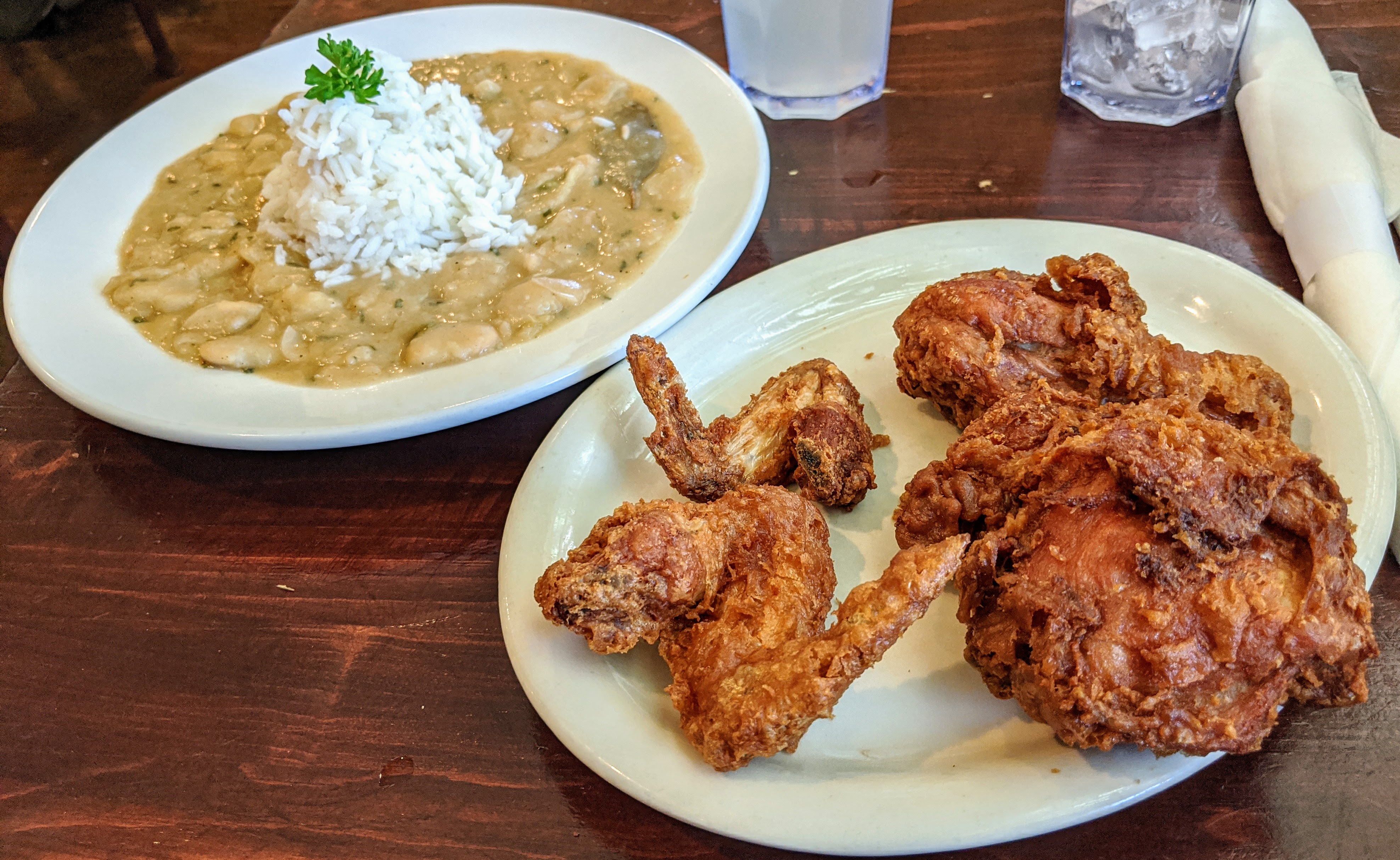
And the fun thing is that for how much I loved the chicken, those humbly plated butter beans, suggested by the waitress who was dearly rewarded by my biggest tip to date, those butter beans were just out of this world.
The Mississippi River
Saturday morning: definitely not the best moment to go have a beignet at Café du Monde.
On one side, people lining up along Jackson Square to grab a table; on the other, people lining up in a kind of a back alley, stinky from last night’s hard-partying, to grab their breakfast to go. I did a bit of both, then settled for the stinky alley line that looked shorter, but turned out to be so much slower.
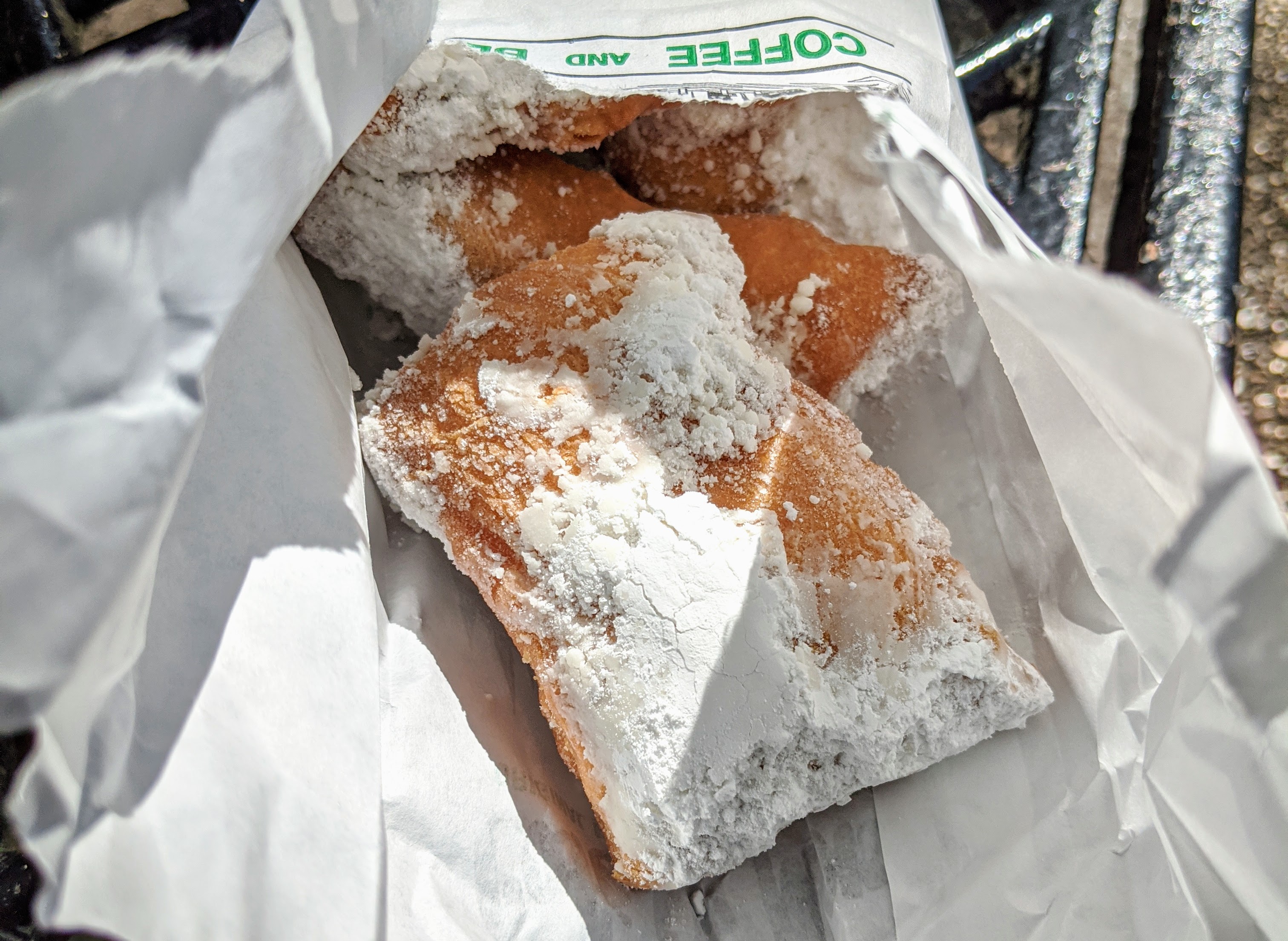
Beignets are fried dough covered with a thick layer of powdered sugar, and they are delicious.
So simple yet so satisfying, burning hot, oh god I can’t stop thinking about them, I want more, now!
(I had more, of course.)
Hearty breakfast out of the way, it was time for a 4km-long walk on the Mississippi riverfront, passing through Woldenberg Park with its paddlewheelers, Frenchmen Street in Marigny with its renowned music venues, then Crescent Park nested between the river and the railroad, all the way to the Poland Street Wharf and the World End at the edge of Bywater.

A paddlewheeler docked at Woldenberg Park 
View of the Crescent City Connection from the Rusty Rainbow Bridge 
A rather big boat 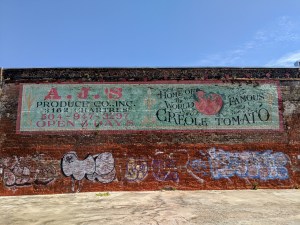
A nice vintage ad 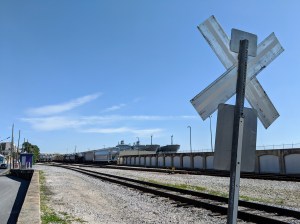
The railyard of Poland Street Wharf 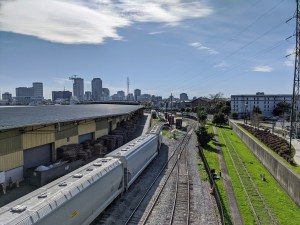
View of the CBD from a bridge over the railroad 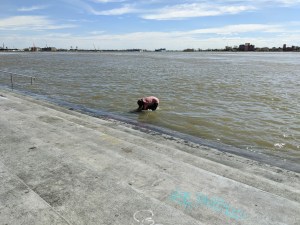
A gentleman bathing in the Mississippi 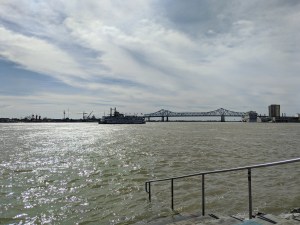
The Creole Queen sailing downriver
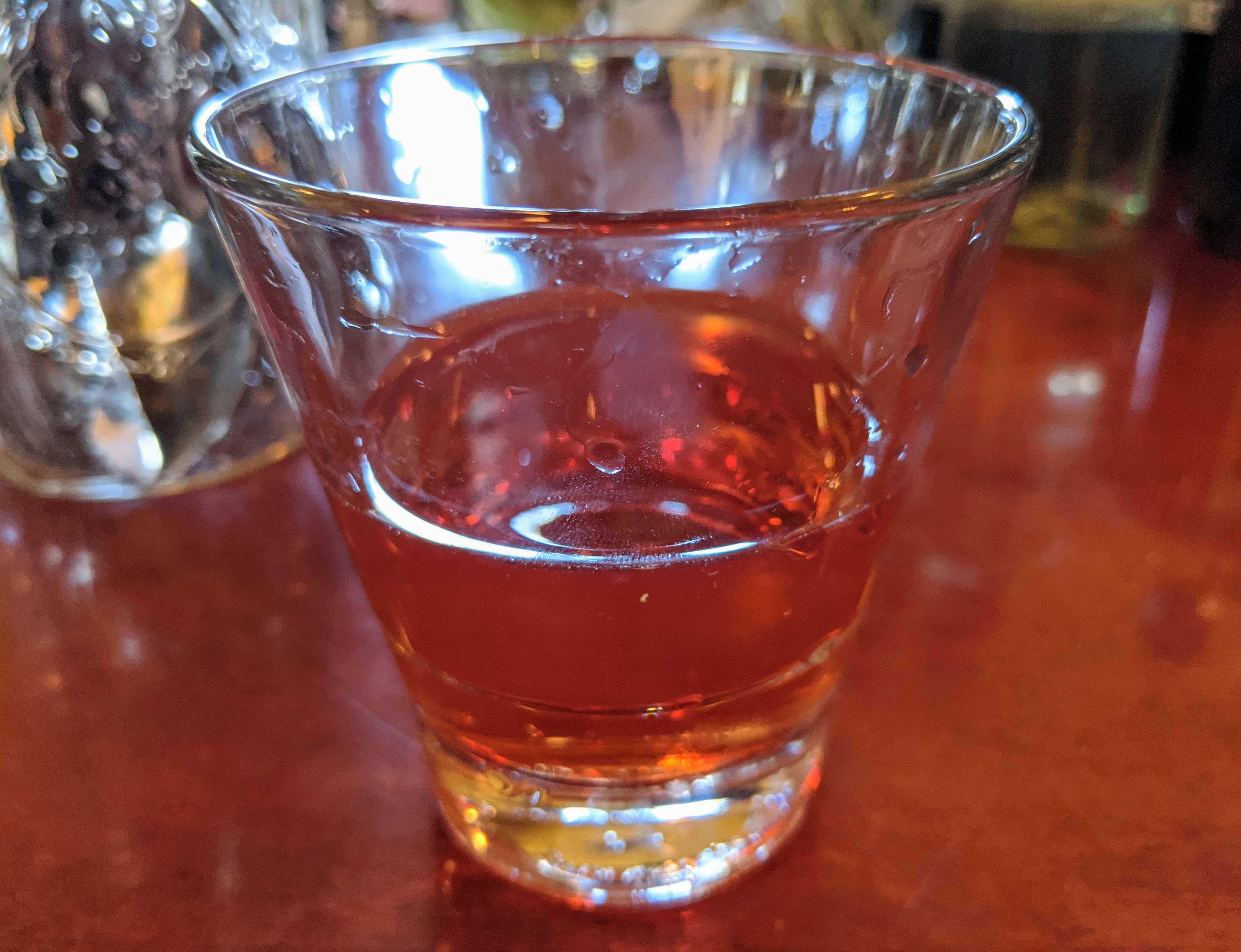
There I found some rest at the Bacchanal, a wine bar with the most lovely backyard, where I quenched my thirst with several sazeracs.
They were very, very good.
The Architecture
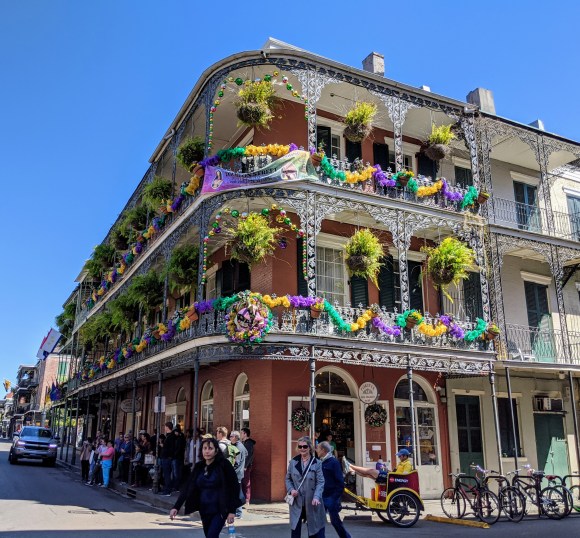
If there’s anything I’ve learned by watching the New Orleans episode of Anthony Bourdain’s The Layover is that New Orleanians are really into their city’s architecture, and once there I could definitely see why.
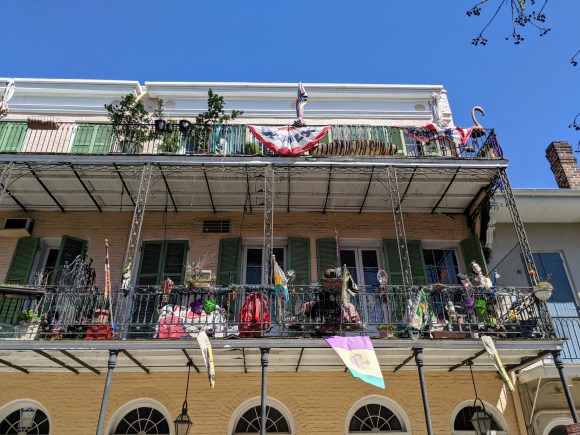
From the beautiful mansions of the Garden District, to the shotgun houses of the poorer neighborhoods; from the Creole townhouses of the French Quarter with their cast-iron balcony railings, to the Creole cottages of Marigny and Bywater.
Everything was a triumph of color and eccentricity, of pride for their culture and traditions.
Now please enjoy a fairly long gallery of lots of houses, and some occasional not-houses that piqued my curiosity.

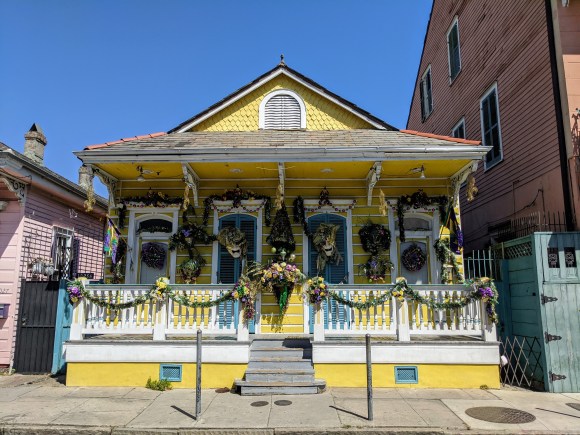
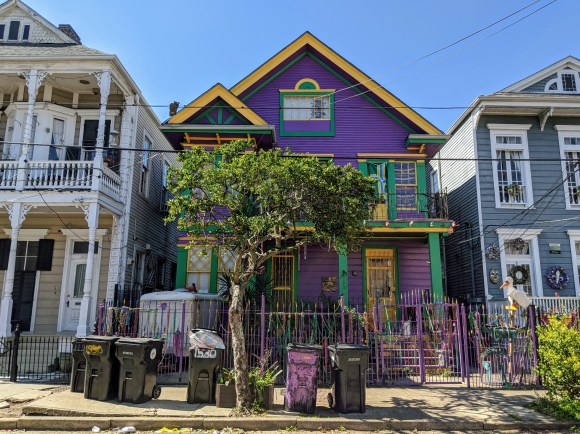
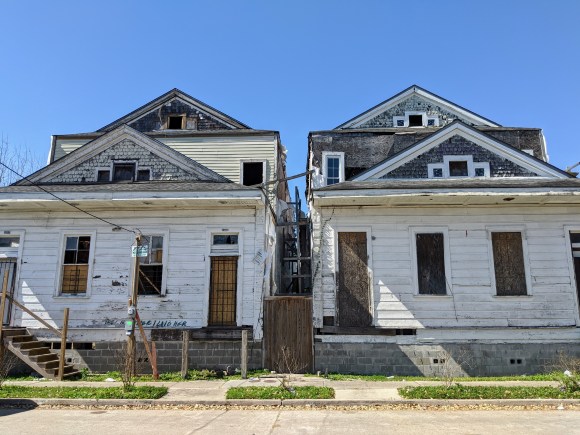
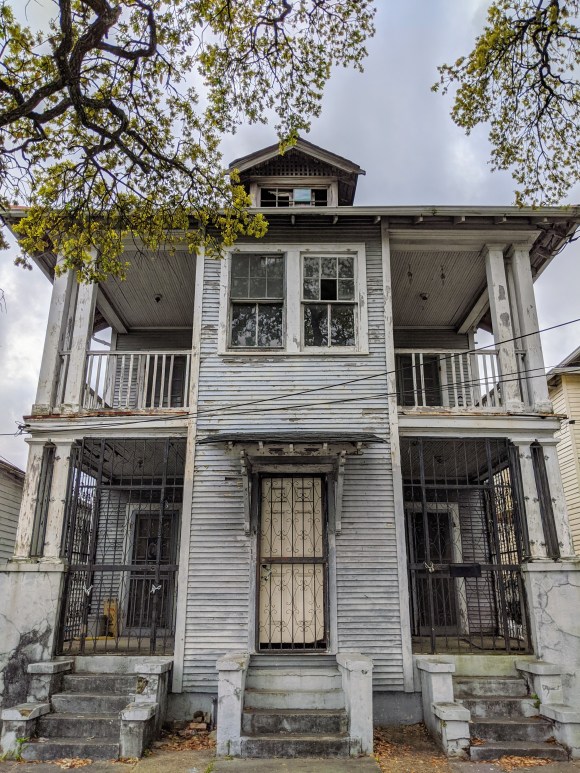
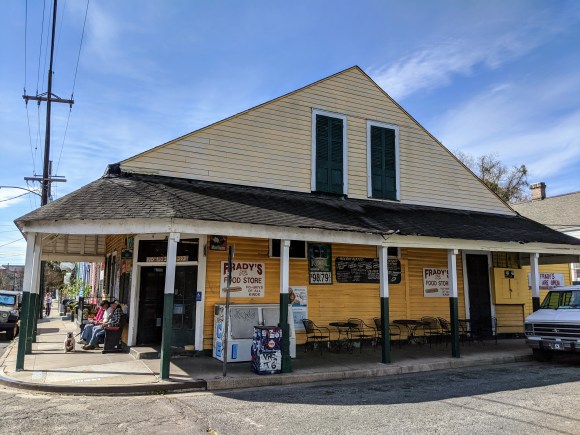
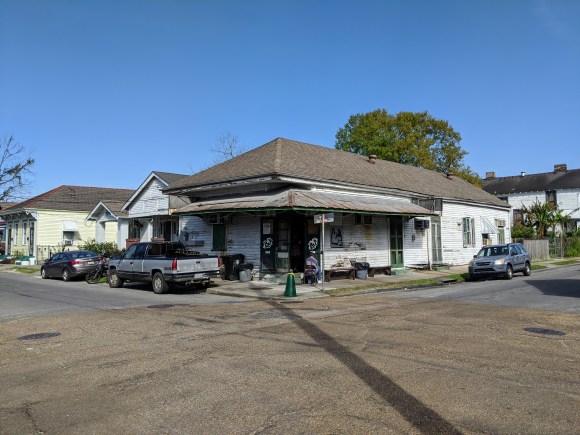
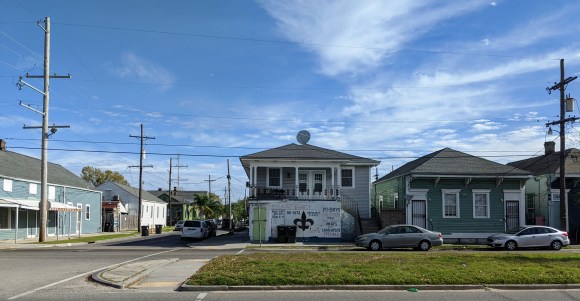

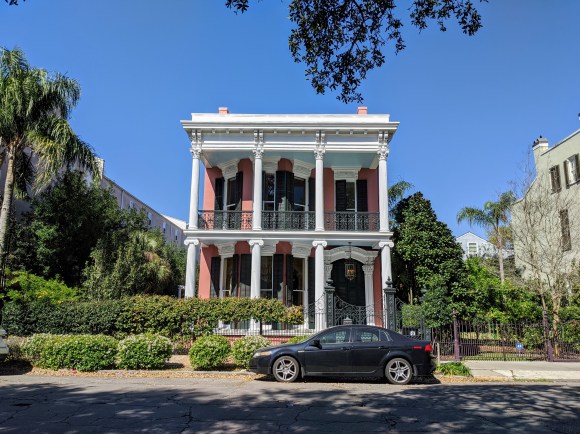
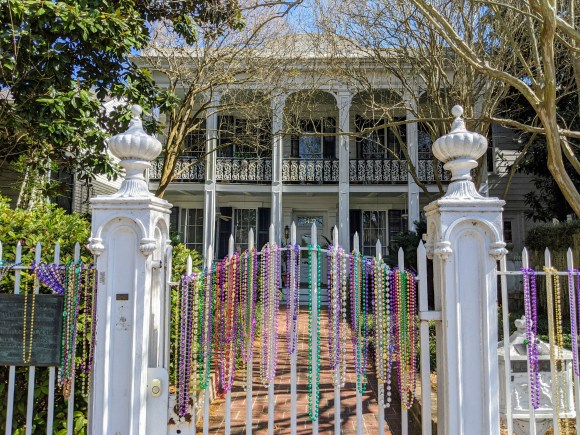
The vibe of this city is so intensely mixed. Creole and American, of course, but European as well.
European is the city center (or Vieux Carré, or Barrio Francés), with its town square and the Cabildo.
Creole is the food, African the music, and American all the inherent contradictions.
Only all together, and only here, they can make this exhilarating combination called New Orleans
The Second Line Parades
Second Line parades were the first and foremost reason I wanted to visit New Orleans, and as a matter of fact, they didn’t disappoint.
Treme (the TV show) fans already know what I’m talking about; for everybody else let me quote a sign found in the Backstreet Cultural Museum:
“Second line” often refers to the secondary group of people who follow the hearse, mourners, and band at a jazz funeral procession, or those who follow the band at a secular street parade. […] “second line” also describes the dancing that takes place, sometimes known as “buck-jumping.”
A “second-line” beat refers to […] syncopated rhythms. As a song moves along, there are slight differences in rhythmic emphasis from one measure to the next, creating a loose-yet-tight, push-and-pull feeling […]
Two popular examples are […] “It Ain’t My Fault” (written by Smoky Johnson and Wardell Quezerque in 1966) and Joe Avery’s classic “Second Line” recorded in the 1950’s.
Second Line parades happen pretty much every Sunday (well, they would, unless there’s a pandemic going on), but if you’re lucky enough you might catch one for a wedding or a funeral: I stumbled upon one for a wedding in Royal street.
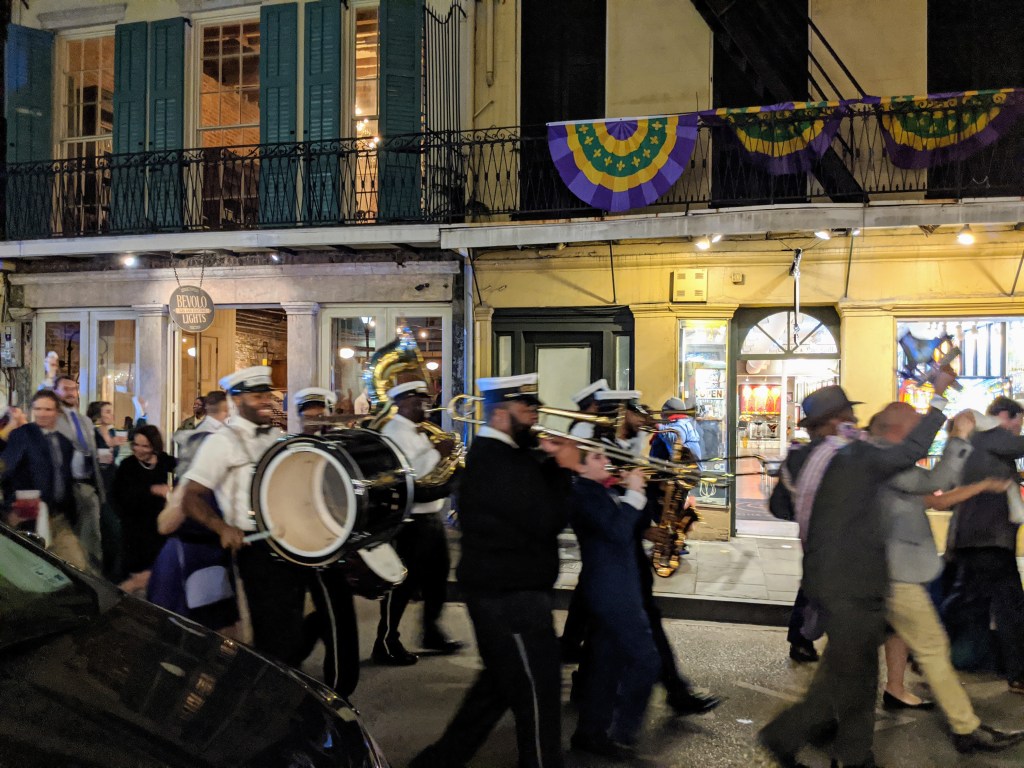
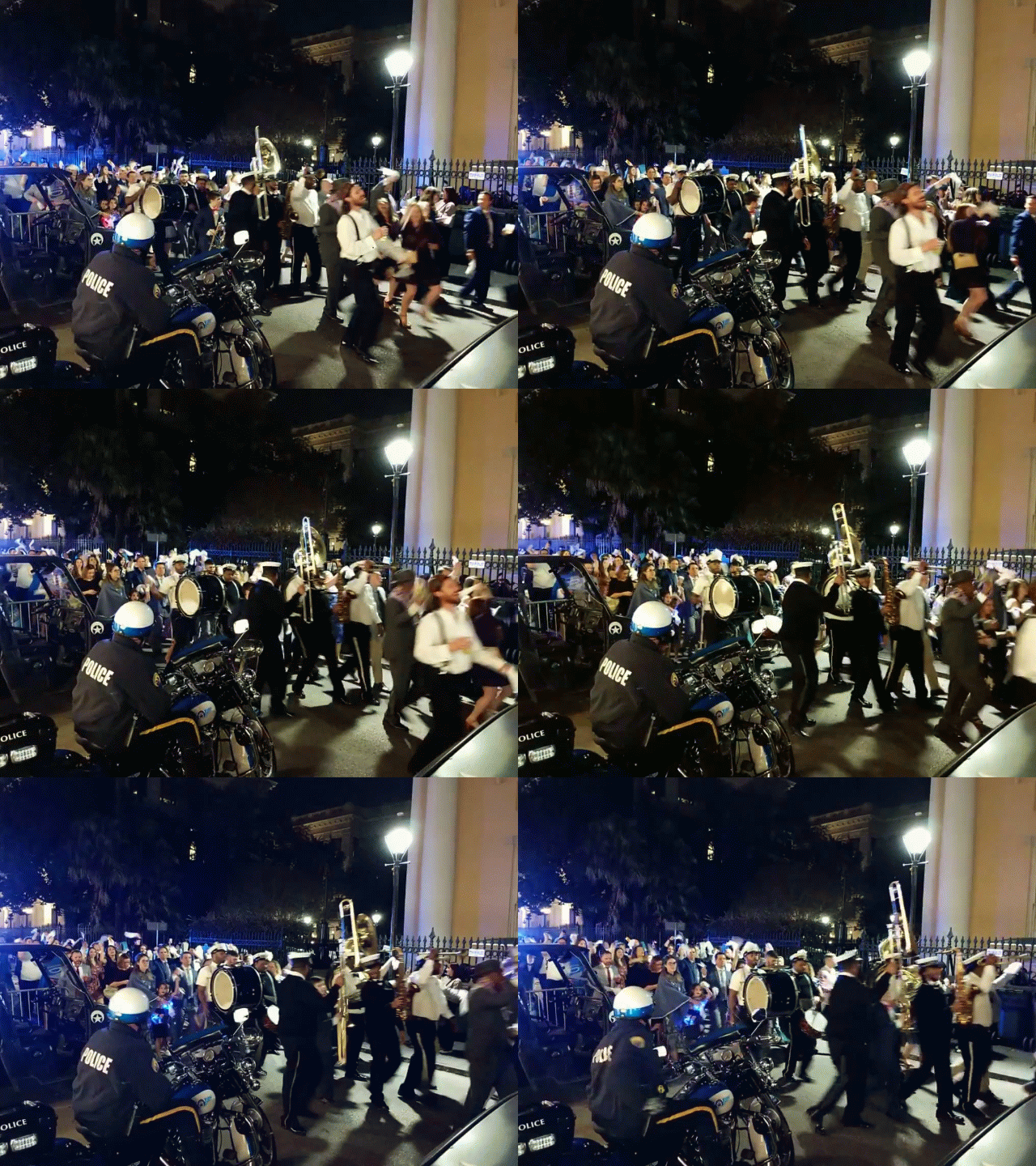
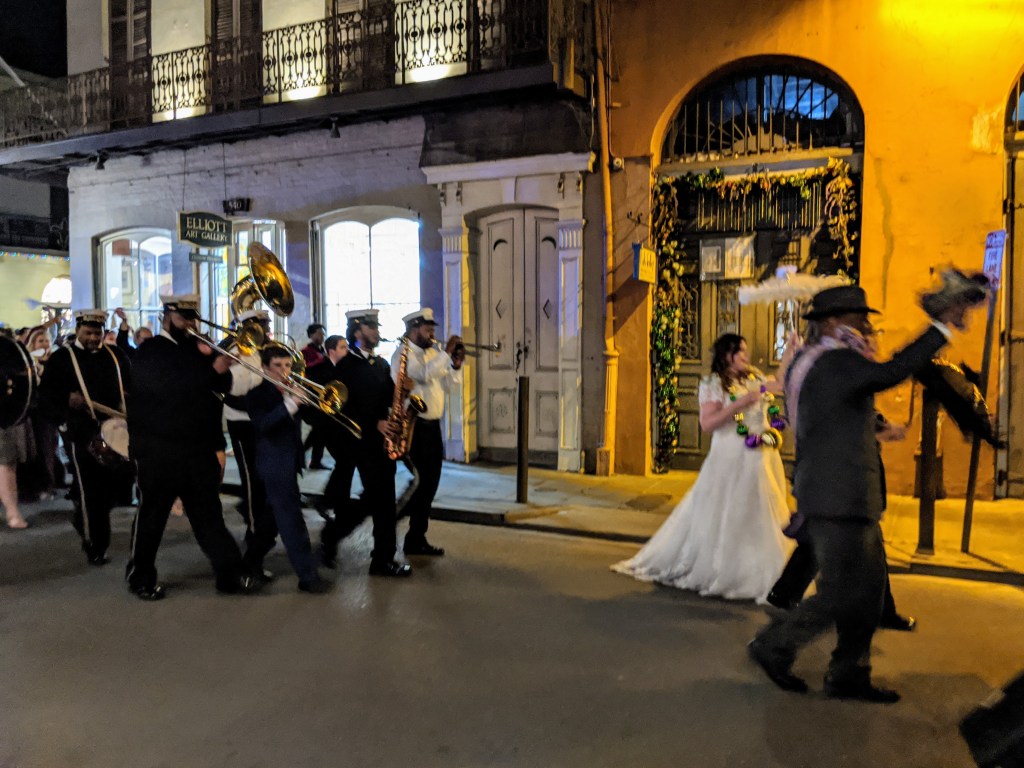
I wanted to see a Second Line parade so much that I changed my plans to include a Sunday in New Orleans.
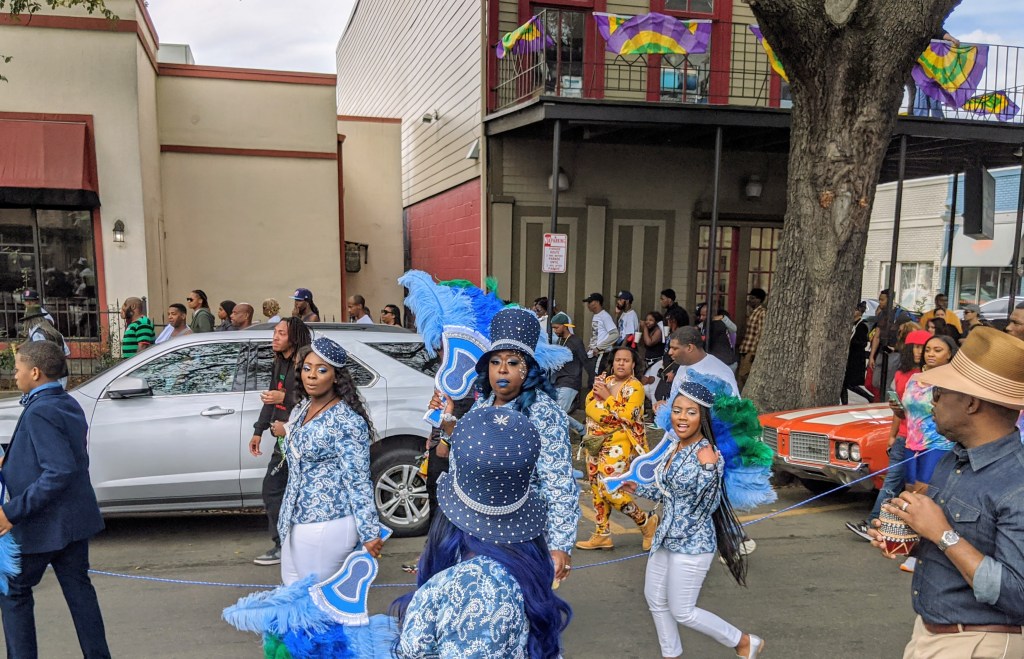
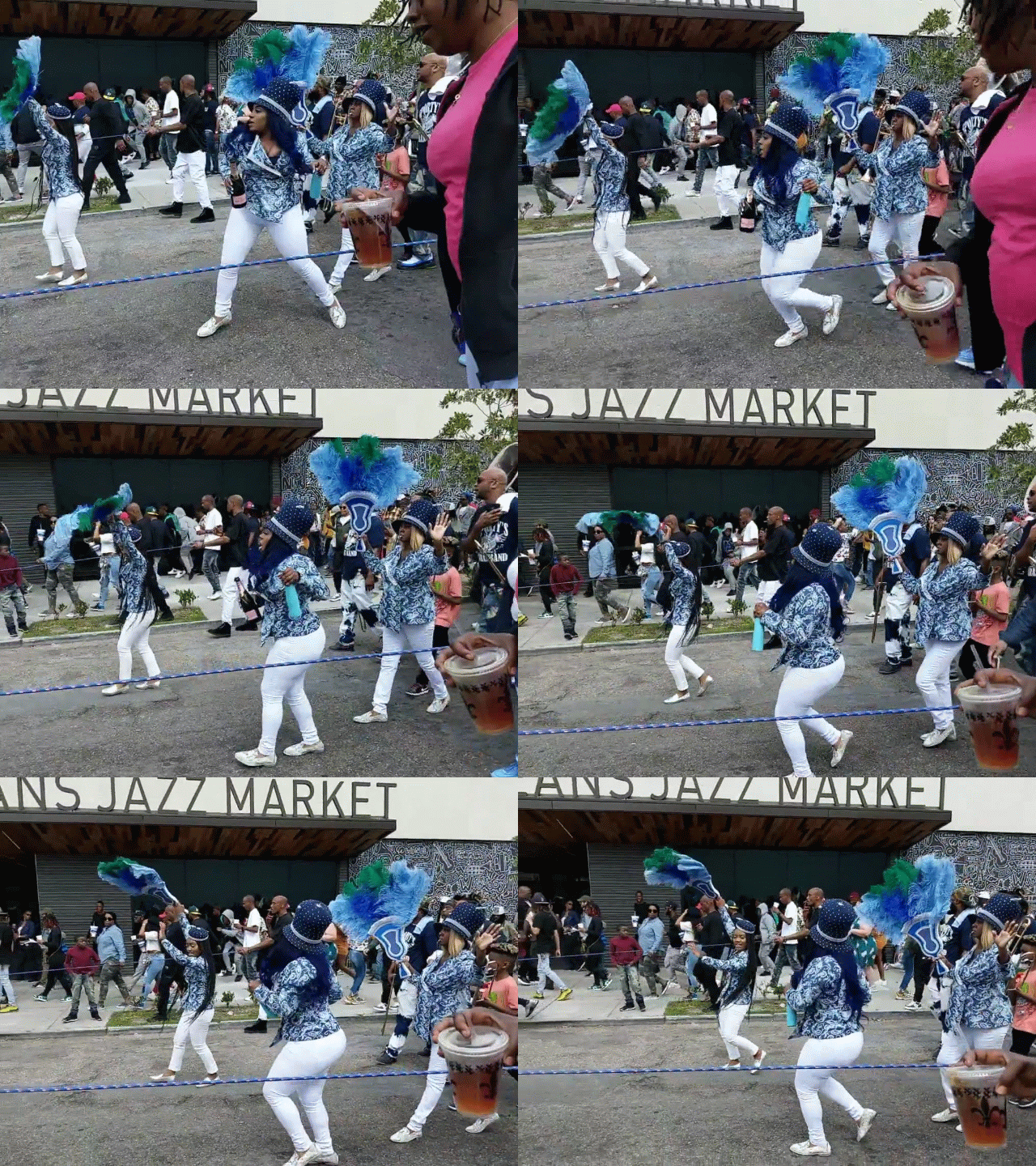
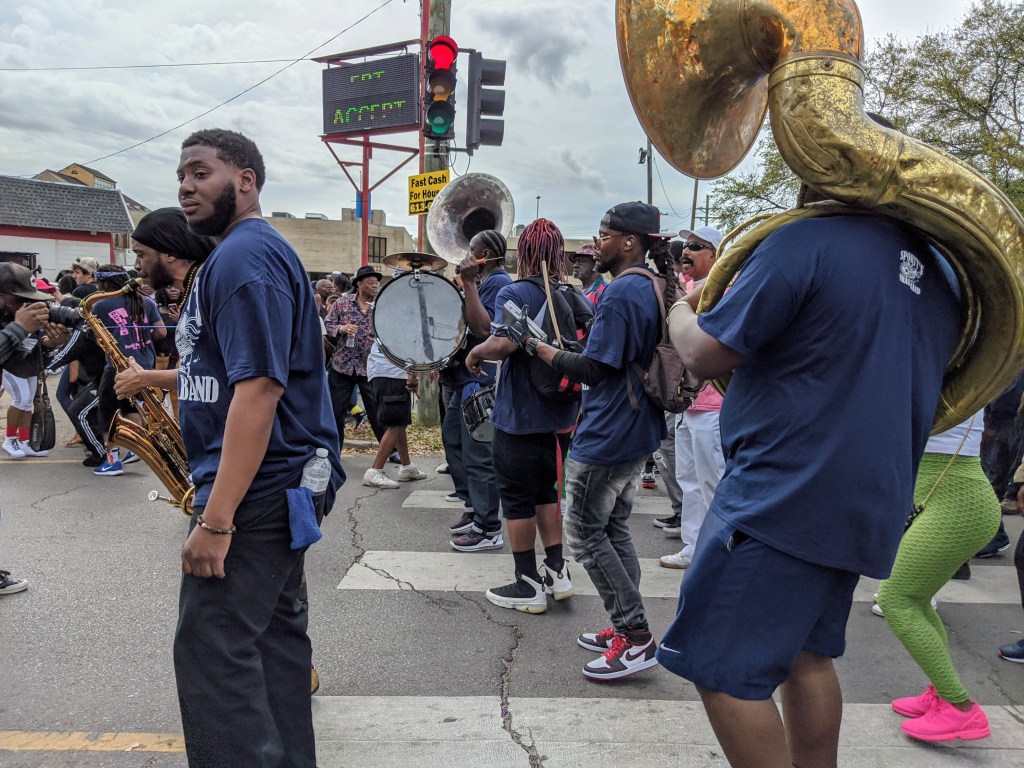
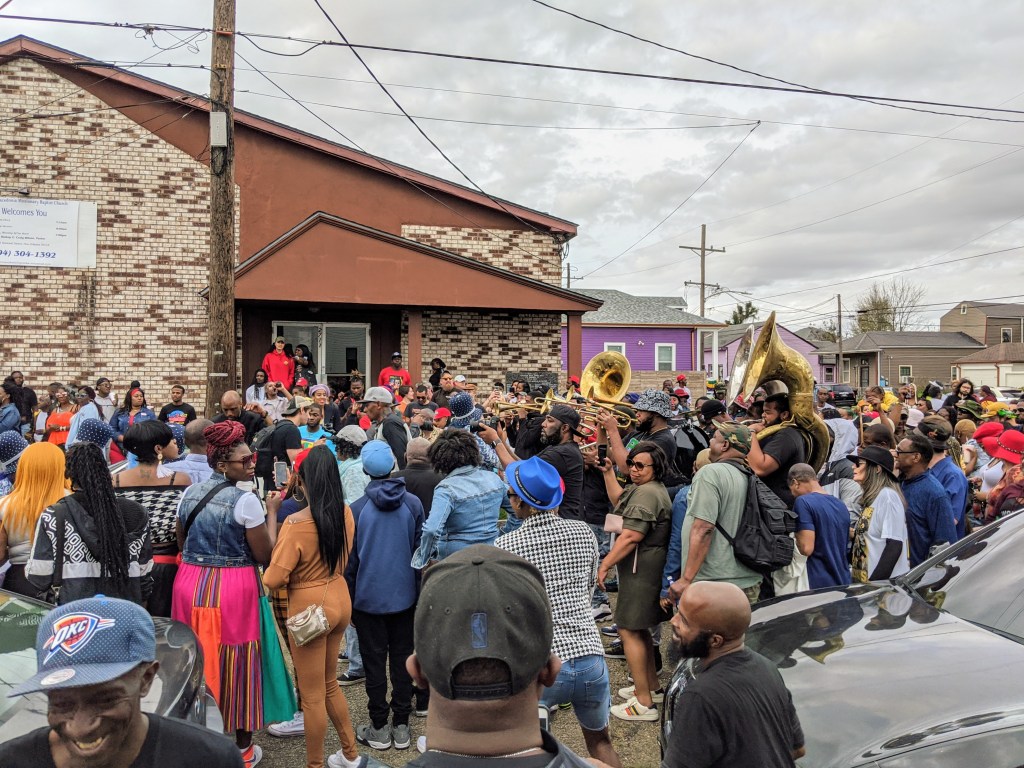
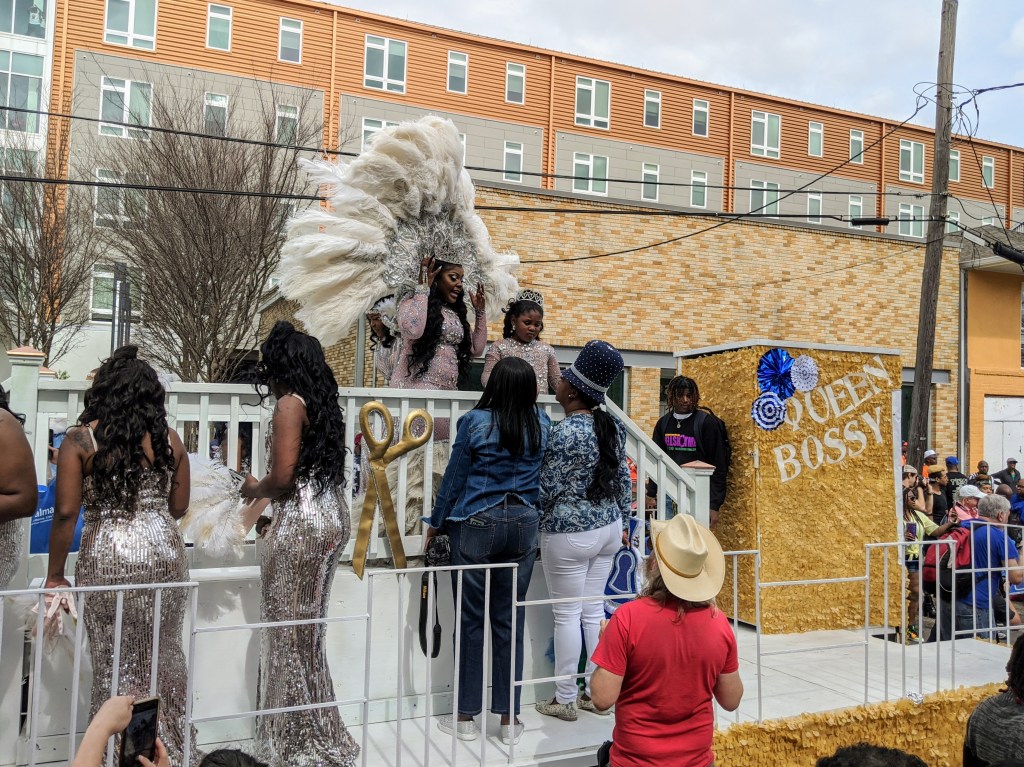
The one on March 1, 2020 was organized by the VIP Ladies and Kids Social Aid & Pleasure Club, and featured the Big Six, Da Truth & Sporty Brass Band.
(Not that all these names mean anything to me…)
What I didn’t know is that these parades are an extremely tiring matter: 4 hours of marching and dancing under the exhausting heat, with 3 different brass bands taking turns, and a few stops en route to eat and drink.
I arrived on time (which means: roughly one hour early) at the starting point, a bar just outside the Warehouse District, where parade floats, the first brass band, and the aforementioned VIP Ladies and Kids were getting ready.
What I witnessed then was an ecstatic celebration, that might have been religious or otherwise cultural, by people of all kinds, for themselves and their community, and for visitors alike.
The floats leading far away, then the social club with fancy outfits dancing, and the brass band in second line closing the parade, surrounded by the crowd, everybody dancing, on those bumpy rhythms, everybody singing along.
The parade was interspersed by people selling beers and other drinks, dragging along makeshift coolers.
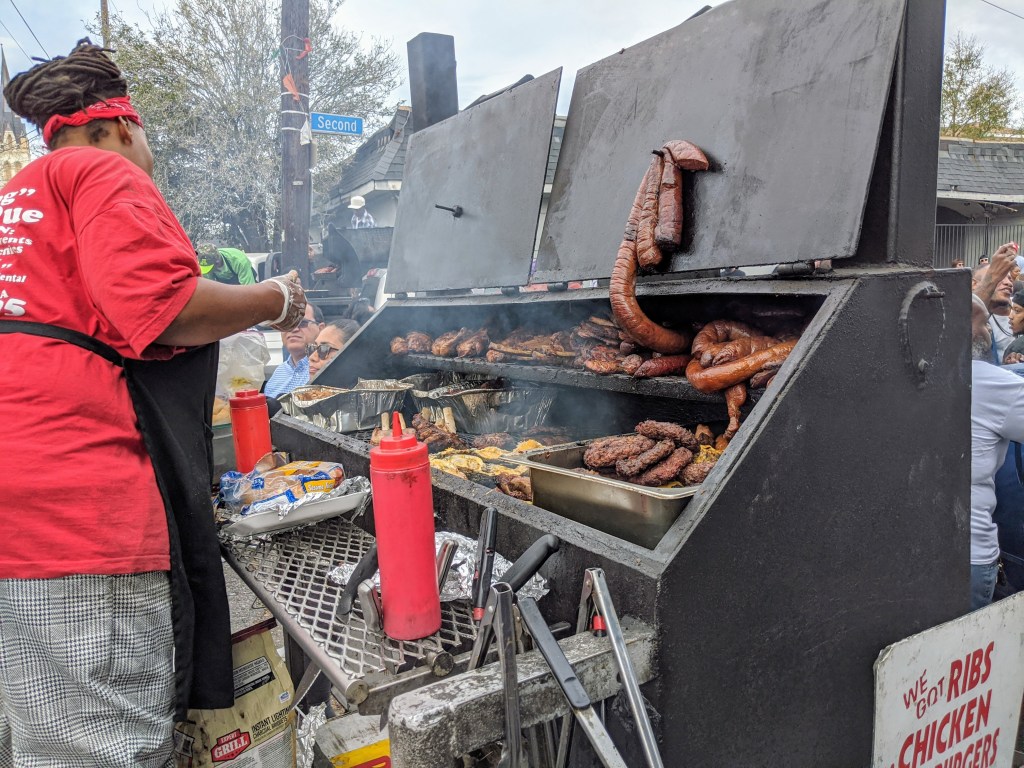
At the stops, the fresh band would sub for the exhausted one, and meanwhile everybody could get some rest and food, mostly from ladies cooking mountains of meat in huge, smoky BBQs placed on pick-ups parked at all corners.
Look, it’s just impossible to describe, so I’m just going ahead and drop some pics and videos, and hopefully you’ll get a better idea of what was going on.
Driving Westward: The Bayou
As I’ve mentioned many lines ago, this was supposed to be a work trip: my team was to meet up for a week in a nice villa on the lake near the NASA Space Center in Houston.
New Orleans to Houston are roughly a 6-hours drive apart, which makes for a nice solo road trip.
With just one day available, my plans were:
- Enjoy the extra wide American roads.
- Eat some cajun food.
- See some alligators.
It turns out that, south of Lafayette, there’s Avery Island, an island in the middle of swamplands, basically owned by the McIlhenny family, most famous for producing Tabasco—from peppers planted on this very island!
The McIlhennys were sort of mental people, half businessmen and half adventurers, with a penchant for exotic plants and dangerous animals. And so they turned their residence into a natural garden, chock-full of (among others) egrets, turtles, armadillos, but also snakes, bears, and alligators.
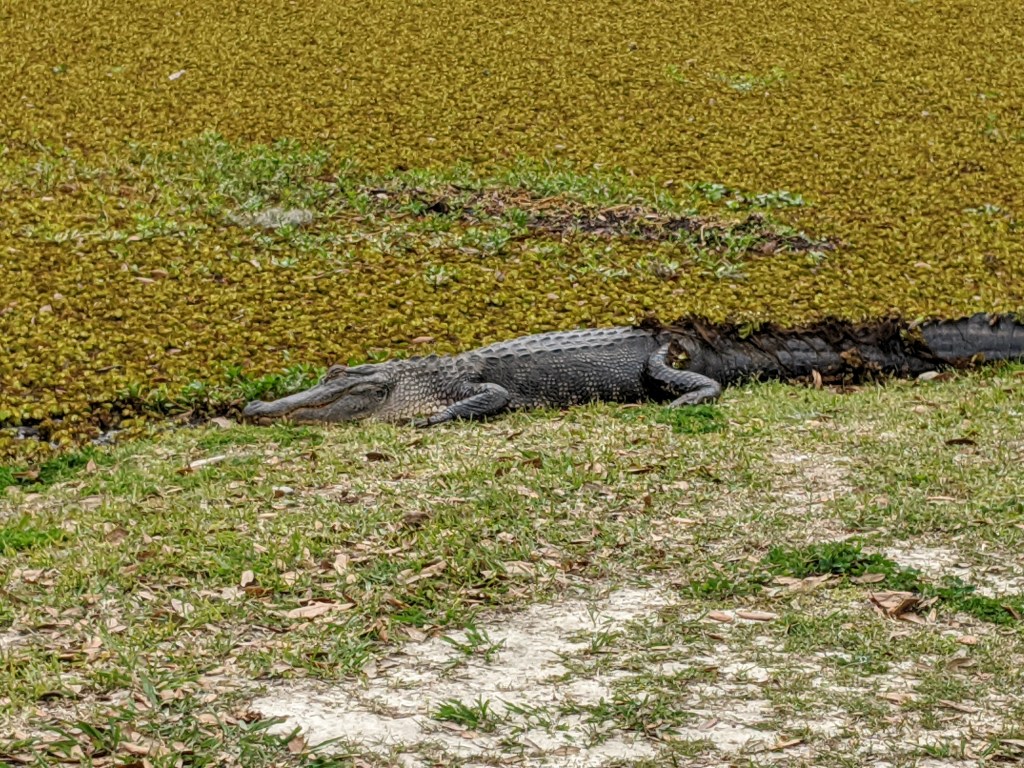
Nowadays this place is called Jungle Gardens, it’s open to the public, and even better, it’s possible to experience it (almost) entirely from inside your own car. Which is kind of a relief, when you can get very, VERY close to a real, live alligator.
An alligator 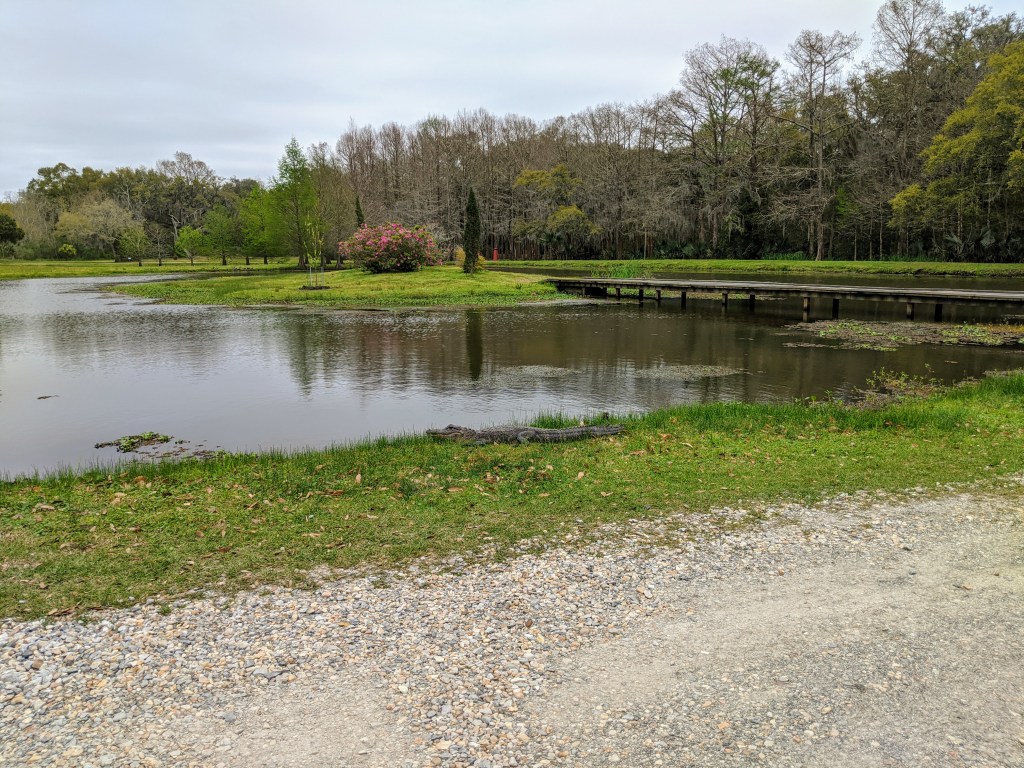
Another alligator 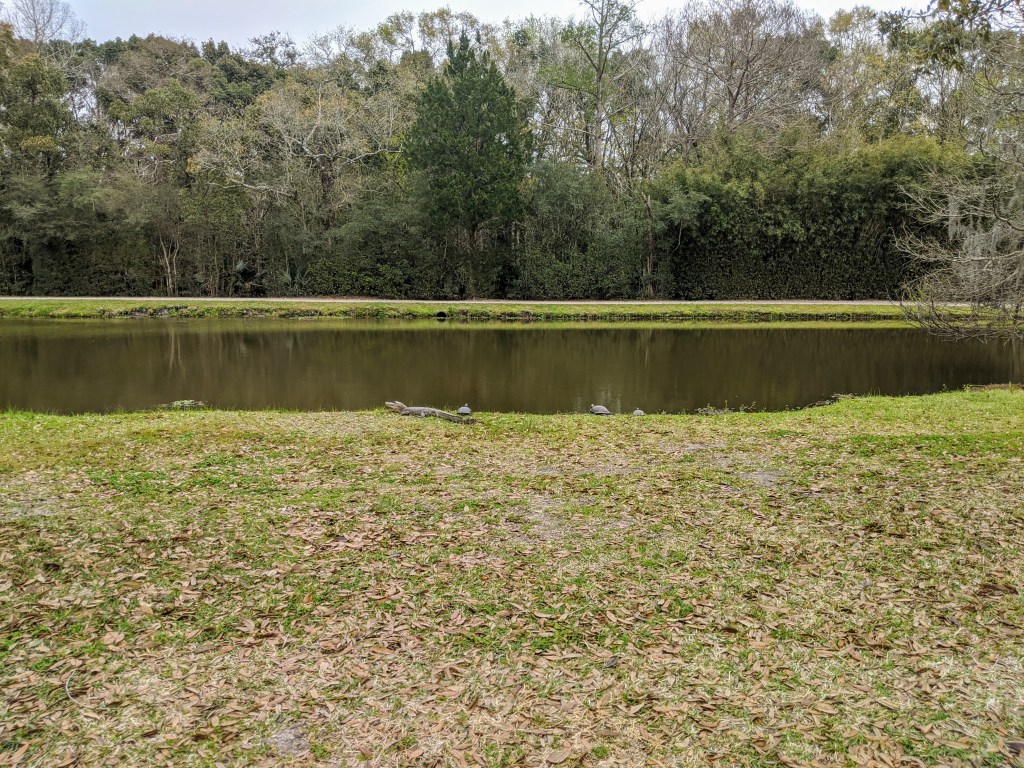
An alligator with some turtles 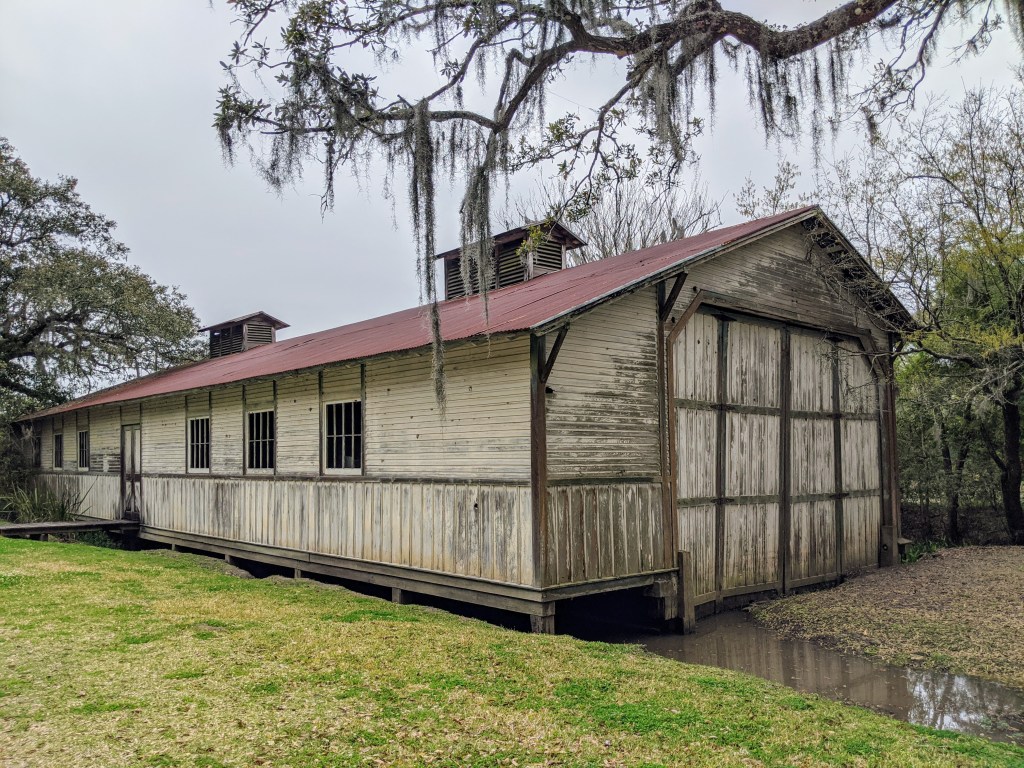
A cabin on the swamp where occult serial killers work 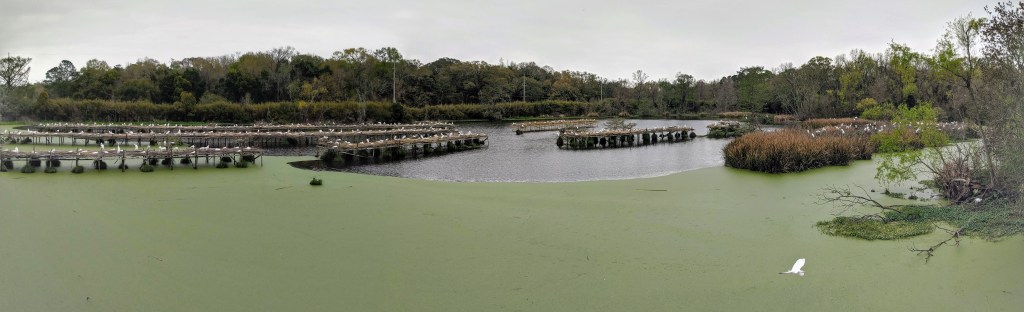
A fuckton of egrets
Nassau Bay and NASA
During my connection at Dulles, flying from London to New Orleans, Automattic cancelled all work travels due to the COVID-19 outbreak, except for those already happening.
All my team promptly cancelled their flights, except me and my colleague Glen from New Zealand: we had roughly the same idea of visiting New Orleans before going to Houston, and were already on American soil.
The outbreak wasn’t scary yet, especially in the USA, so we both decided to go ahead with our plans, and do our normal work, but from a huge mansion tucked away at the end of the Houston suburb Nassau Bay, right beside the NASA Space Center.
The Space Center is a somewhat interesting visit, overrun by school trips. There isn’t that much to see, honestly.
The highlight, though, is a Saturn V rocket stored inside a gigantic hangar. I never realized it from pictures and videos, but in real life it’s just huge!
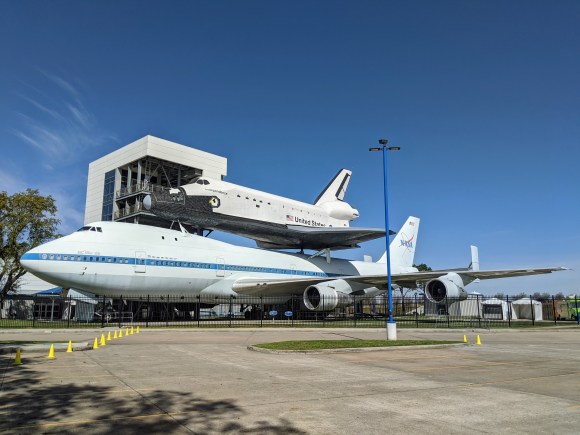
The Space Shuttle (replica) on top of the SCA 905 (real) 
The Space Shuttle cockpit (replica) 
A Mission Control Center, currently used for training and as a backup 
The huge engines of the first stage (S-IC) of the Saturn V 
The smaller engines of the second stage (S-II) of the Saturn V 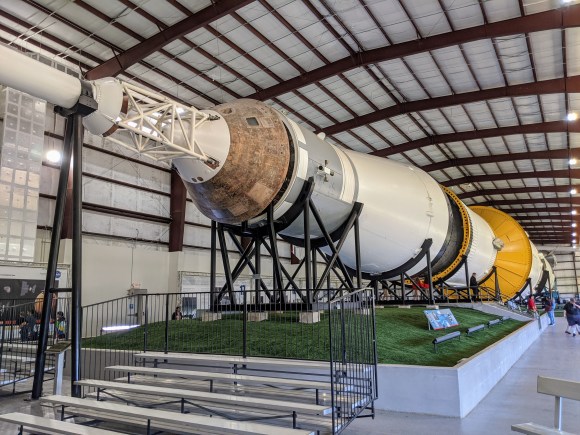
Quite big, isn’t it
Now, if you are interested in Nassau Bay, don’t be.
It’s really just a quiet town made up of wealthy lakeside houses wedged between Lake Nassau, Clear Creek, and Clear Lake.
Oddly enough, a group of nasty geese wandered around the neighborhood with a fixed daily schedule. They were almost as huge as the Saturn V rocket at the Space Center, and equally freaky.
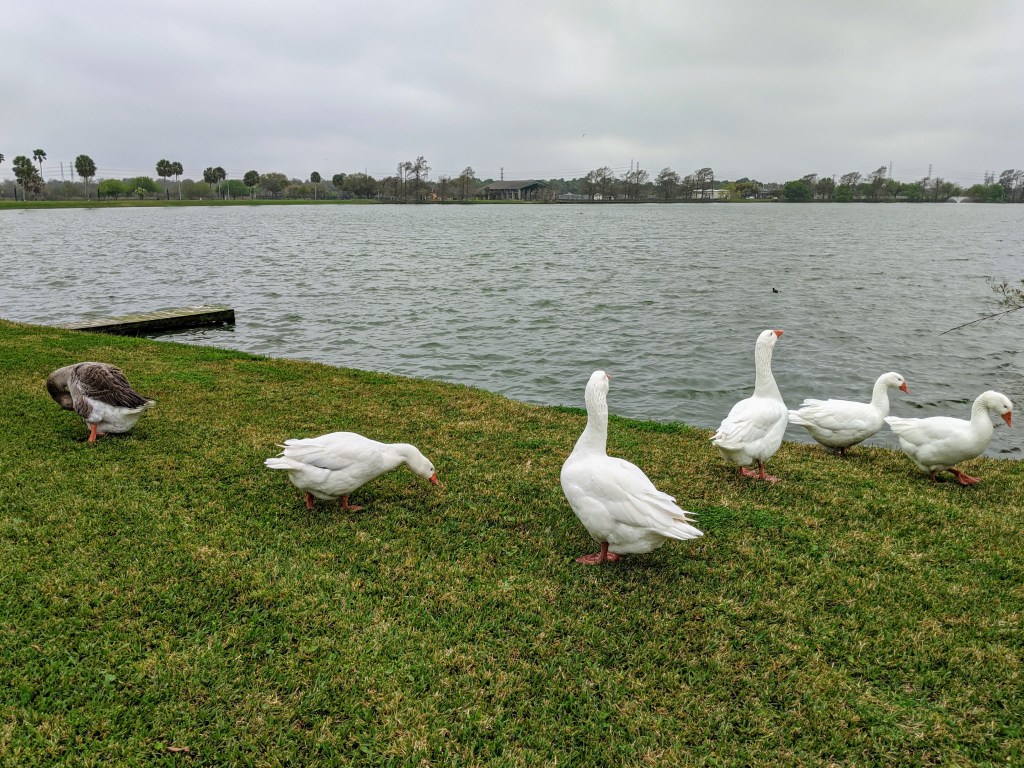
Look at them! 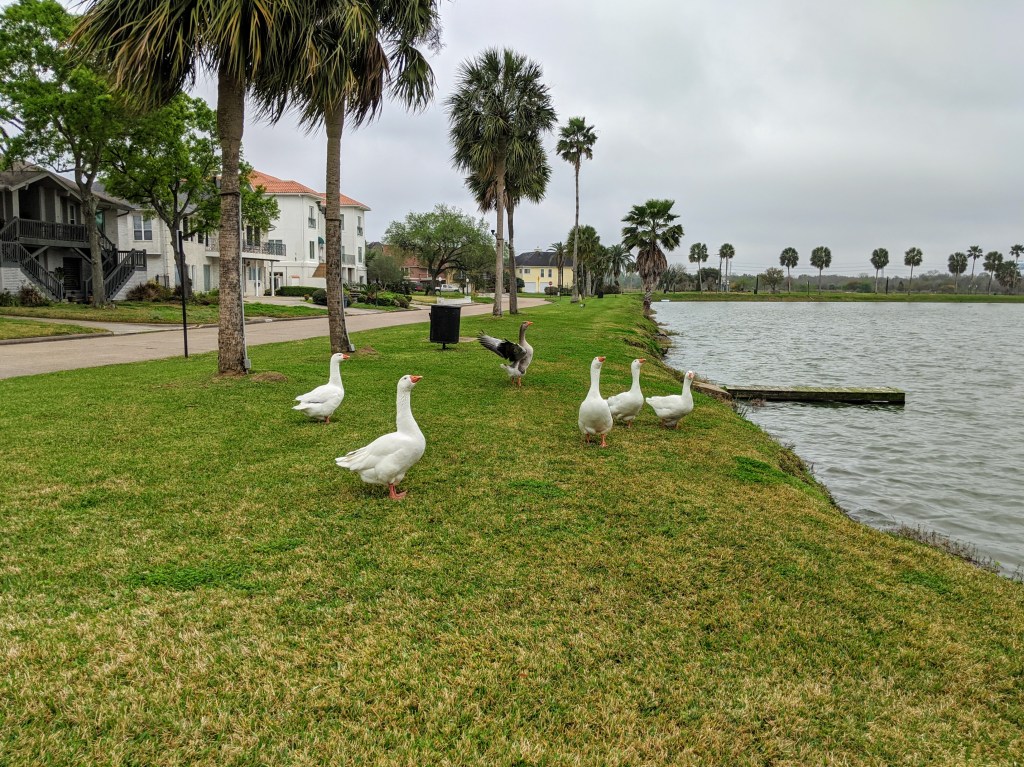
Look at all that threatening flapping! 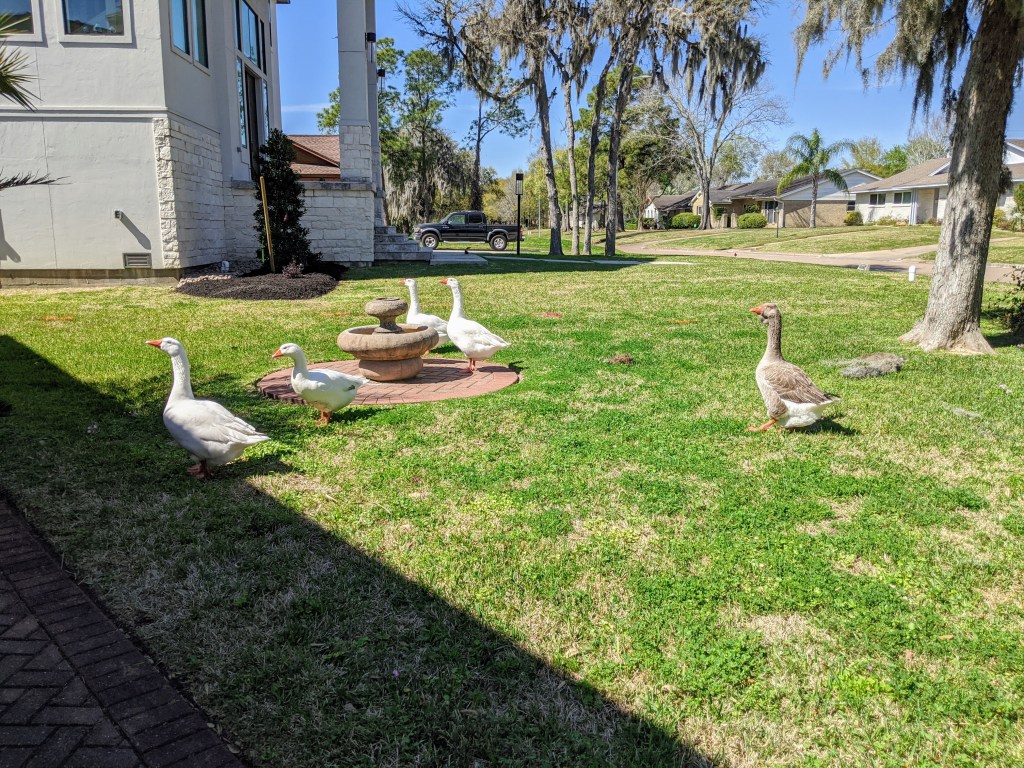
Look at them prancing around! 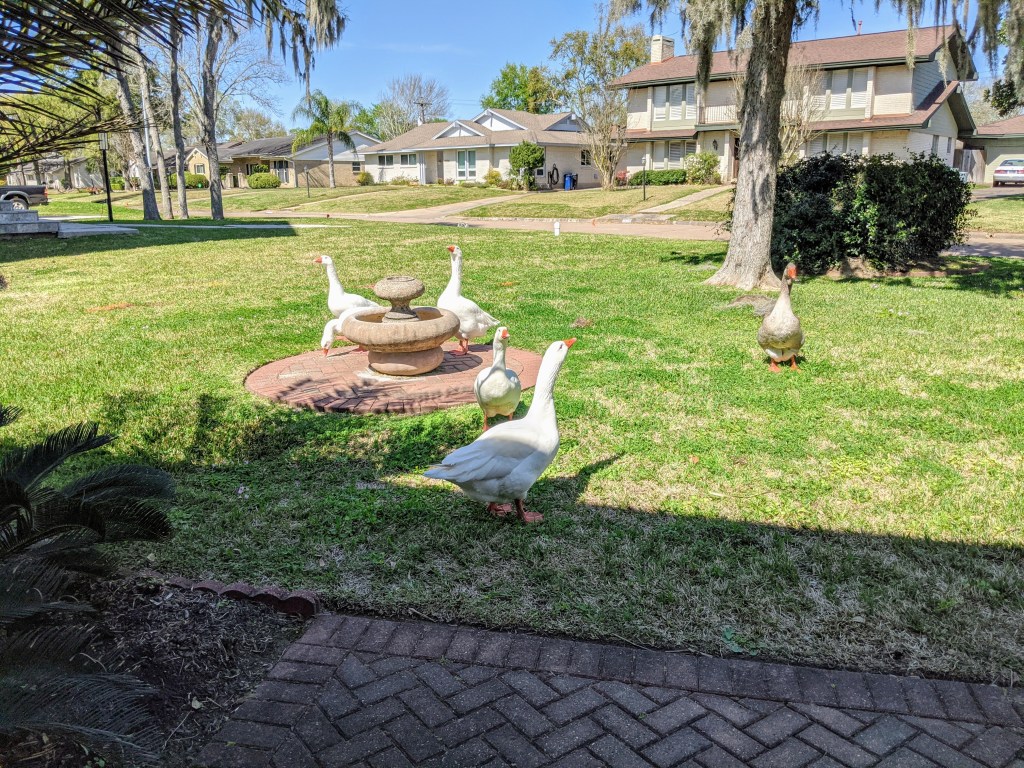
Look at them looking at me!
Back then we didn’t know yet that this would have been our last travel before the worldwide lockdown.
At the time of this writing we’re still stuck home.
Here in the UK the isolation has just started a couple days ago, so we can’t complain yet.
But still, I’m really looking forward to step onto a plane and get to anywhere else again.
 Copons Blog