
I don’t have a strong opinion about violence in videogames. Having been a gamer for most of my life, I’ve become completely desensitized to, well, anything. I can casually jump from a killing spree in GTA to reflecting on the complexities of relationships in Florence, without giving it much of a thought.
Yet in the last couple of years I’ve found myself much more intrigued by games featuring a compelling and mysterious story, well integrated environmental puzzles, and a whole lot of exploration in an exciting world.
Among everything I’ve played, three games really stood out, leaving me craving for more: Lucas Pope‘s investigation masterpiece Return of the Obra Dinn, Inkle‘s archeological and linguistical puzzle Heaven’s Vault, and Mobius‘ quantum space exploration Outer Wilds.
I don’t think there’s a specific genre encompassing all those features, so I took the liberty of playing with the 4X definition (“eXplore, eXpand, eXploit, eXterminate”) instead.
A Few Words on these Games
Just to be on the same page.
Feel free to skip if you already know all about them.
(Spoiler-free of course!)
Return of the Obra Dinn
A detective game set in the 19th century. We are an insurance investigator tasked to assess the damages of the Obra Dinn, a ship that was lost at sea a few years earlier and just showed up back in port without crew.
The investigation relies on a device that lets us relive, and explore at will, the last moments before a corpse death.
By piecing together all the clues gathered this way, we’ll eventually learn the fate of the Obra Dinn.
Heaven’s Vault
We are an archaeologist in a strange world made up of little planets connected together by space-rivers.
On these planets we’ll find fragments of ancient texts to translate, that will guide us to the very edge of the Nebula, to uncover the mysteries of a long-forgotten past.
Outer Wilds
Aboard our shabby spaceship, we are free to explore an entire planetary system, but with a twist: we are stuck in an endless 22-minutes long loop.
There are secrets packed everywhere and it’s best to play without any prior knowledge this love letter to science and the wonder of discovery.
Explore
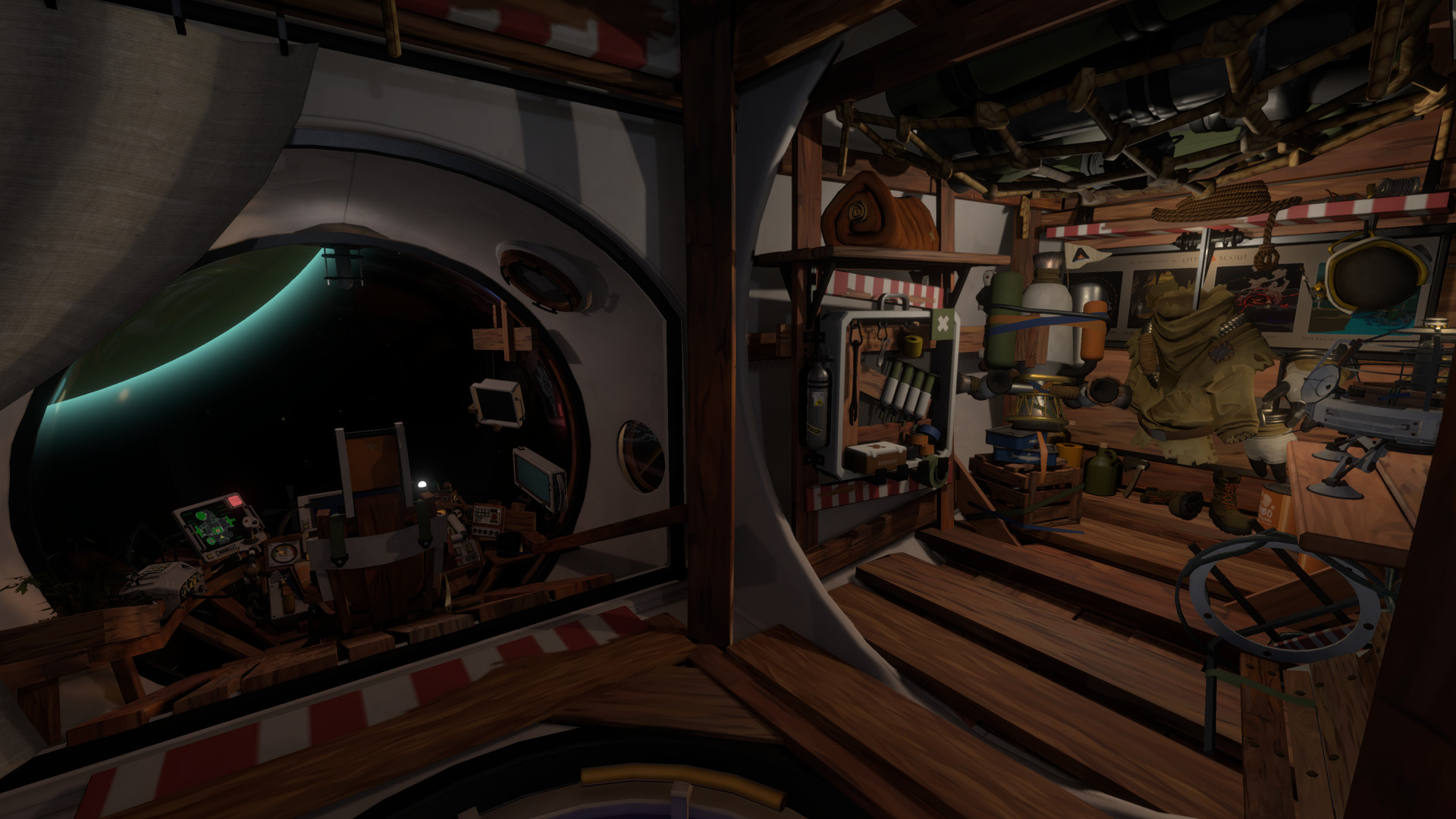
Of the three games mentioned, Outer Wilds is the most exploration-heavy: we get a spaceship and an entire planetary system to traverse at our whim. It’s a very tiny planetary system, but filled to the brim with surprises!
Sure, we’ll need to figure out how to fly (and land!) that spaceship, and to do it in wildly different conditions. But once we learn the ropes, we are just free to explore everything.
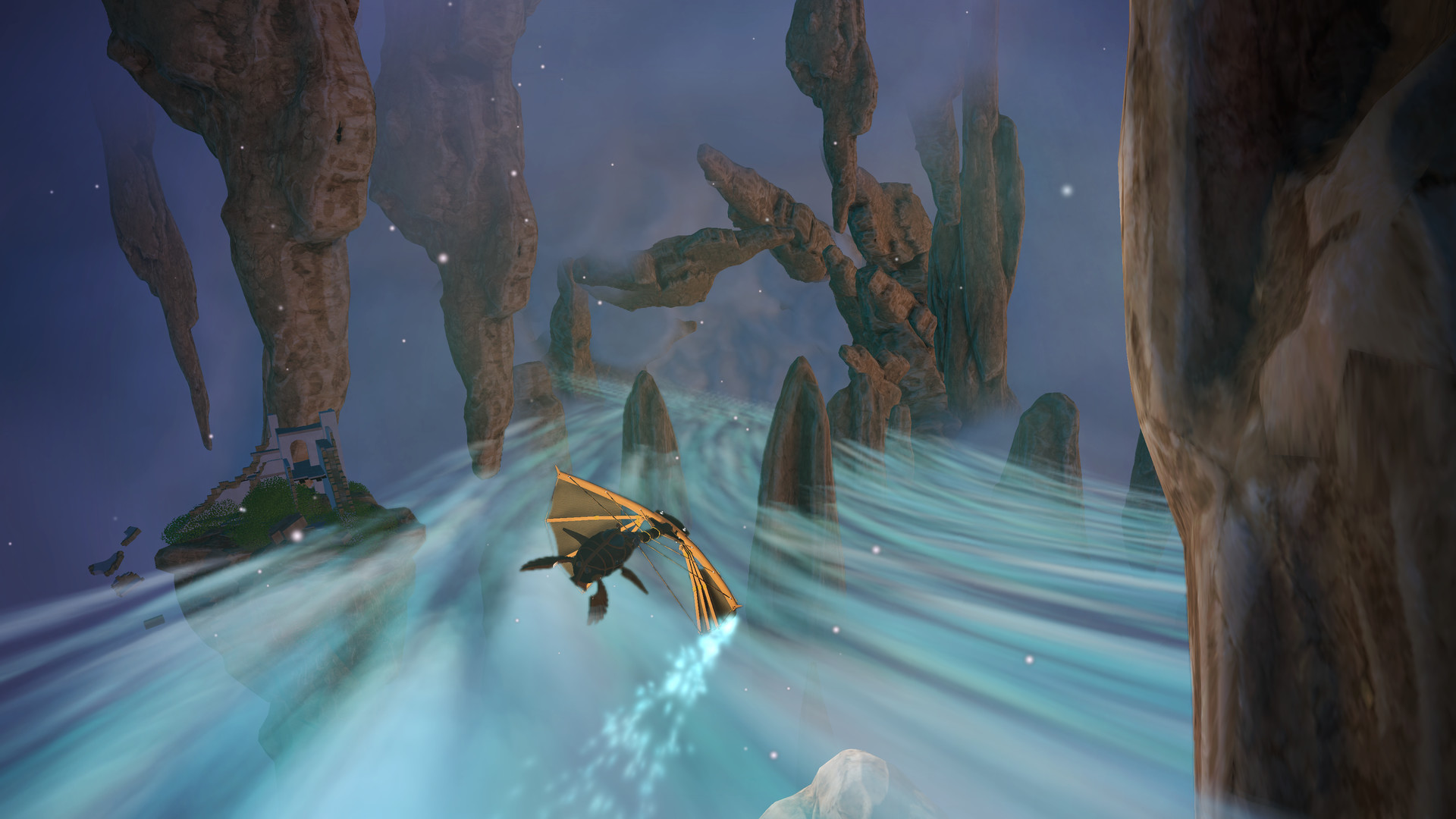
Heaven’s Vault is slightly more constrained. With some minor exceptions, the exploration involves clumsily navigating “rivers” to specific points of interest, without much going on from A to B.
On land, the exploration remains slightly straightforward, always looking for new fragments of ancient texts to translate, in order to make something of the place.
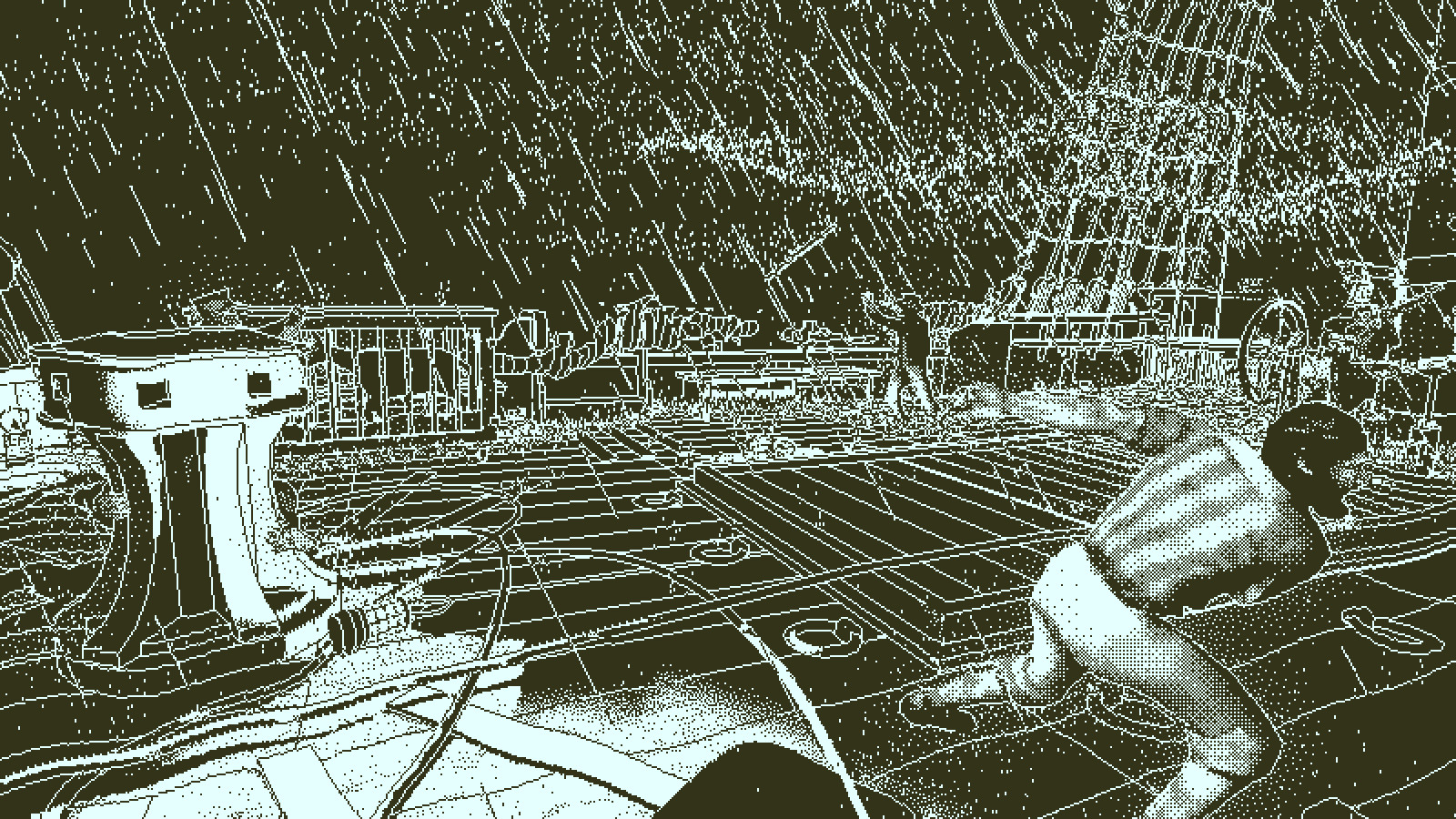
Obra Dinn downscopes even more: we only get to explore the titular ship. Though, Lucas Pope’s painstaking detailing of the Obra Dinn more than makes up for the lack of walkable space.
Size never matters, though.
Years ago I had something to say about the huge but empty Hyrule of The Legend of Zelda: Breath of the Wild, and my opinion hasn’t changed at all since then.
That world is technically “living”, in the sense that it contains living beings moving and going about, but exploring it doesn’t give us anything more than shallow sandbox fun and some really beautiful views to screenshot.
Compare it to Outer Wilds: its world is pretty static, unpopulated, and with scarce wildlife. And yet every corner tells a story that keeps unraveling over each trip. Its history, geography, science, and rules make it compelling. They carry the sense of discover much more than a beautiful sunset.
Examine
Obra Dinn, being an investigation game, is the undeniable king of examining stuff.
Every single pixel, even the menu, is a clue. Nothing is unnecessary or out of place; everything serves a purpose, even if it takes some time and brainpower to see it.
By backtracking the unfolding of the story, we get both a wider and narrower look at the world.
Obra Dinn keeps us always on the edge between these two scopes, managing to maintain an exceptionally tight narration, without ever sacrificing the readability of the events.
Thinking about it, Lucas Pope achieved an almost unbelievable feat. The story revolves around different timelines crossing each others, all leading to different clues that will help uncovering different details of the Obra Dinn. Yet there are no plot holes, no dead ends.
The fragments of ancient texts in Heaven’s Vault are procedurally generated so they don’t give us a proper path to follow, while the fully open nature of Outer Wilds lets us figure things out in any order.
Both eventually converge to an ending, which is both good (a closure is always good) and bad (leaving behind such great worlds is always hard).
Whereas Outer Wilds limits the hand-holding to a minimum relying on visible outcomes to our experiments, Obra Dinn and Heaven’s Vault share a similar hint system integrated into the core gameplay, that confirms our deductions once we have successfully relied on them to solve other puzzles for a while.
In all cases, solving mysteries is, simply put, exhilarating.
Explain
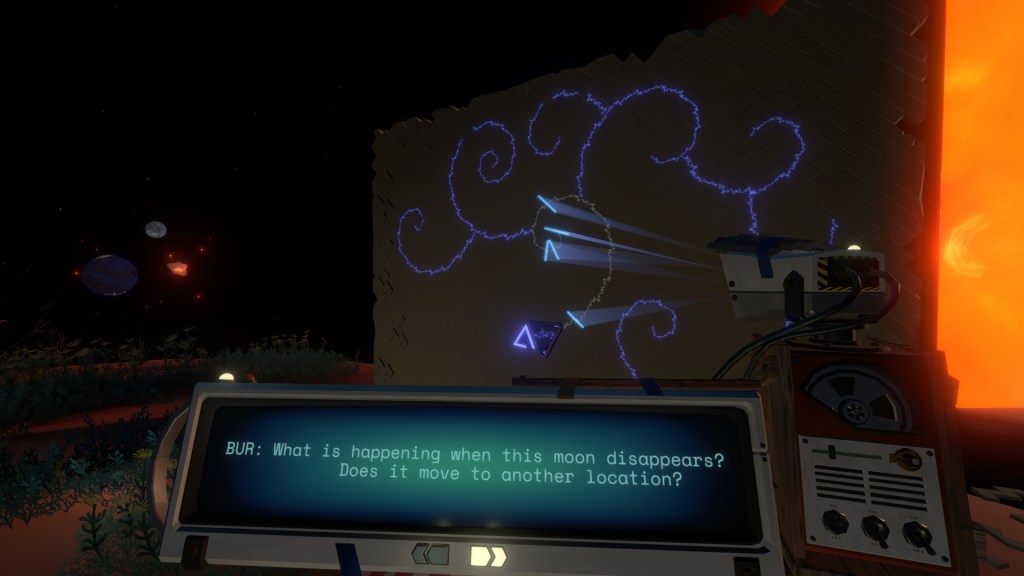
The final outcome of all our explorations and investigations: we get to learn what happened.
All three games take different approaches to their endings (or, in general, how they wrap up their threads), but Heaven’s Vault is one step ahead.
The fragments of ancient texts to translate are procedurally generated, and consequently so are many dialogues. As a result, our own understanding of the game’s story can vary wildly.
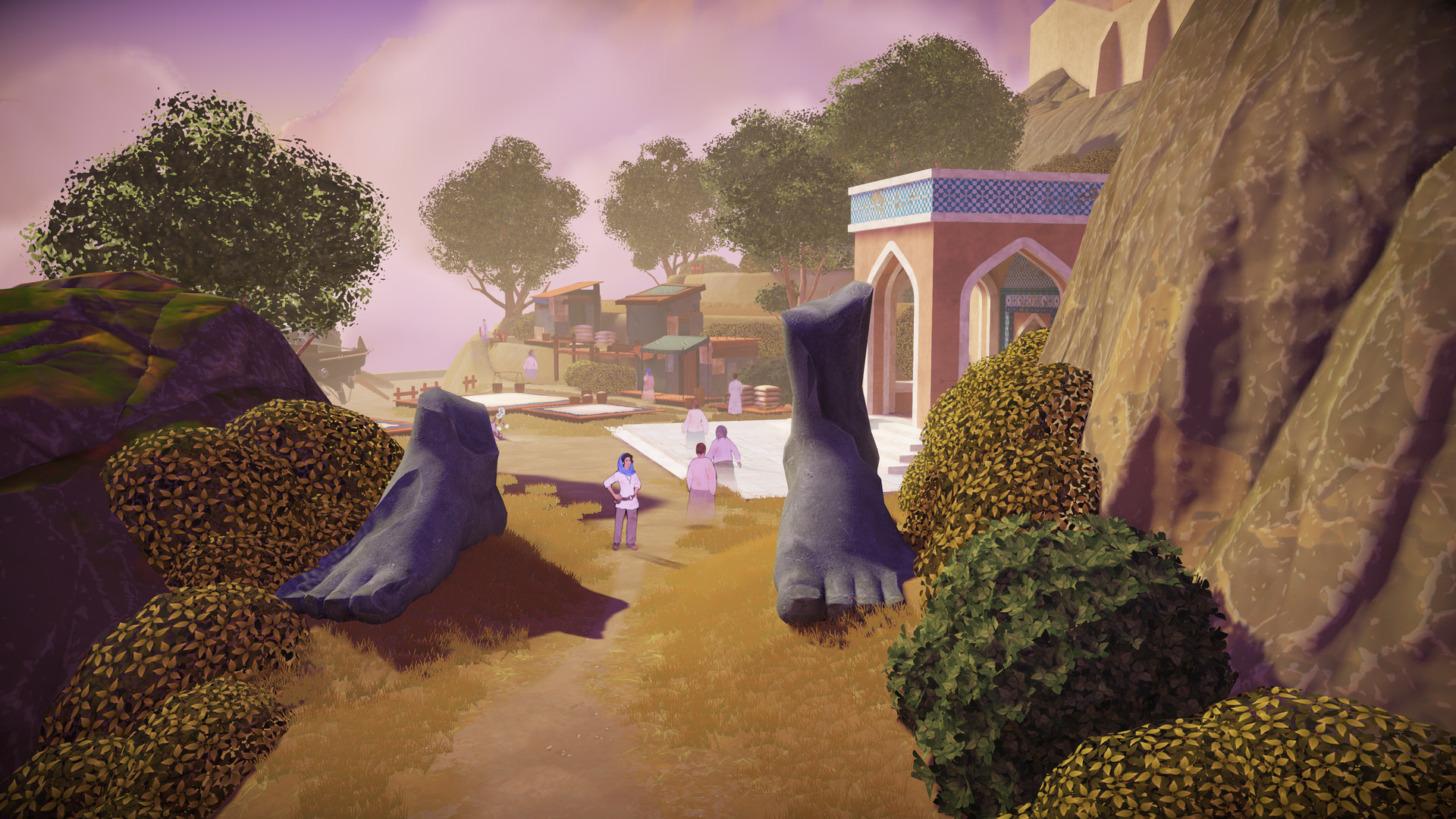
We can explore every nook and cranny of Obra Dinn and learn all the science of Outer Wilds, but it’s probably not possible to complete Heaven’s Vault, not even with multiple playthroughs.
As far as I know, Inkle itself keeps seeing newly generated fragments every now and then. Their game engine really is wondrous.
The explanations may not be right up our alley, but they do offer closure, while leaving us craving for more.
The game’s length plays an important role, and hitting the right amount is essential.
These games don’t rely on repetitions, chores, and padded out content. They are all condensed experiences, constantly giving their best and trying to respect the players’ time (with some excusable exceptions).
3X
Explore, examine, explain.
While the 4X genre is rather old, and has a precisely codified set of rules, these three games I’ve talked about share some similarities while being wildly different between each others.
They are comparable by intent (uncovering past mysteries), by feeling (the exhilaration of discovery), and by their openness (the freedom to explore and experiment at will).
The absence of violence is just the cherry on top: adding some shooting mechanics (or stealth, for that matter) would only move the focus away from the 3Xs, losing tightness, and making the game unnecessarily cumbersome or inaccessible.
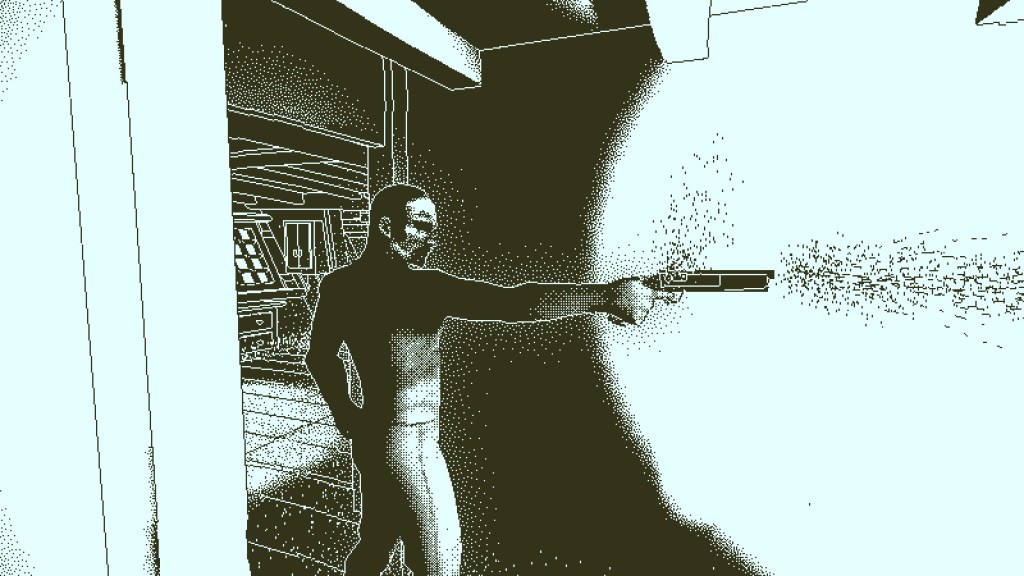
3X games relinquish most popular mechanics and features, and concentrate all their efforts on the world building instead.
Temples aren’t there as mere skill challenges like in Breath of the Wild, but to tell the story of the world they are in.
The game menu isn’t just a dry quest log, but an integral part of our experience.
We don’t take the effort to master the controls only to best an opponent, but to be able to explore further, to widen our horizons.
There are no skills or items to obtain that will give us access to new rooms: the rooms are always there and open, we just need to find them.
In an industry overrun by more-of-the-same games (looking at you, battle royales, hero shooters, metroidvanias, roguelikes, yearly releases of the same IPs), I’m grateful for these small indie teams moving the medium forward on unbeaten paths.
Keep these 3X games coming!
 Copons Blog